What Japan Visa do you need? Everything you need to know to successfully start a new life in Japan (2026)

Moving to Japan is an exciting adventure, but before you can study, work or start a new chapter of your life, there’s one important decision to make: choosing the right Japan visa.
Whether you’re planning to attend a Japanese university, accept a job offer, take a Working Holiday, work remotely as a digital nomad or join your spouse, your Japan visa determines how long you can stay, what activities you’re allowed to do and which administrative procedures you’ll need to complete after arriving.
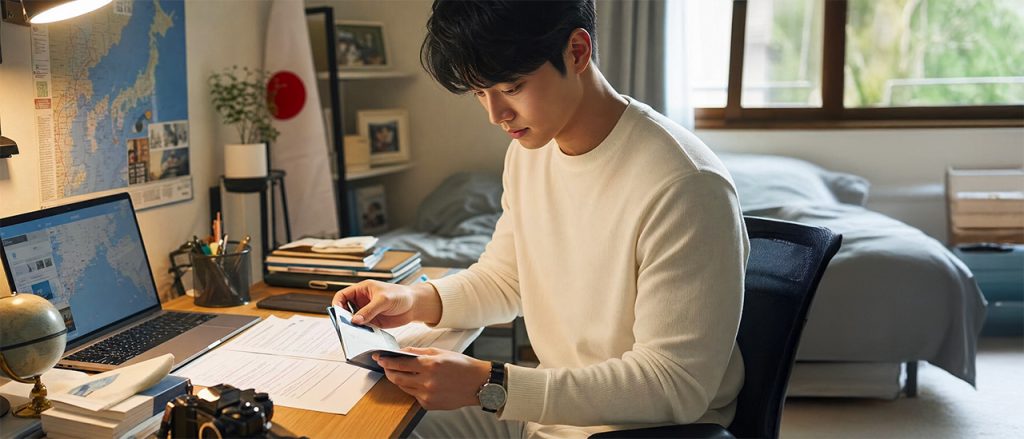
The challenge is that Japan offers dozens of different visa categories, each with its own eligibility requirements, application process and conditions. Choosing the wrong one can delay your move, complicate your housing search or even prevent you from working legally.
In this complete guide, you’ll learn everything you need to know about obtaining a Japan visa in 2026. We’ll explain every major visa category for foreigners, who each visa is designed for, the application process, the Certificate of Eligibility (COE), required documents, processing times, visa renewals and how your immigration status affects your ability to rent an apartment in Japan.
Whether you’re an international student, a young professional, a digital nomad, an entrepreneur or simply planning a long-term stay, this guide will help you confidently choose the Japan visa that best fits your goals and start your new life in Japan with peace of mind.
Which Japan Visa is right for you?
Not sure which Japan visa you should apply for? You’re not alone. One of the most common mistakes foreigners make is focusing on how to apply before knowing which visa actually matches their situation.
The good news is that the right choice is usually straightforward once you know your main reason for moving to Japan.
| If you are… | Recommended Japan visa | Can you work? | Typical stay length | Sponsor Required |
| International student | Student Visa | Part-time (with permission) | 6 months to 4 years | School |
| Full-time employee | Work Visa | Obviously | 1 to 5 years | Employer |
| Working Holiday participant | Working Holiday Visa | Possible to work | Up to 1 year | No |
| Remote worker | Digital Nomad Visa | Under specific conditions | Up to 6 months | No |
| Entrepreneur | Business Manager Visa | Yes | 1 to 5 years | Not required |
| Married to a Japanese national | Spouse Visa | Possible to work | 6 months to 5 years | – |
| Highly qualified professional | Highly Skilled Professional Visa | Of course | 5 years or more | Employer |
| Long-term resident | Permanent Residence | Yes, possible | No renewal required | – |
Each visa has different eligibility requirements, work rights and renewal rules. Some require a Japanese employer or school to sponsor your application, while others are based on your nationality, family relationship or professional qualifications.
Throughout this guide, we’ll explain each Japan visa in detail so you can confidently identify the best option for your situation.
Tip: If your main goal is to study or work in Japan, don’t wait until your visa is approved to start researching housing. Popular accommodations in cities like Tokyo, Osaka and Kyoto are often booked months in advance. Understanding your visa timeline early can help you secure a home before arriving.
Why choosing the right Japan Visa matters?
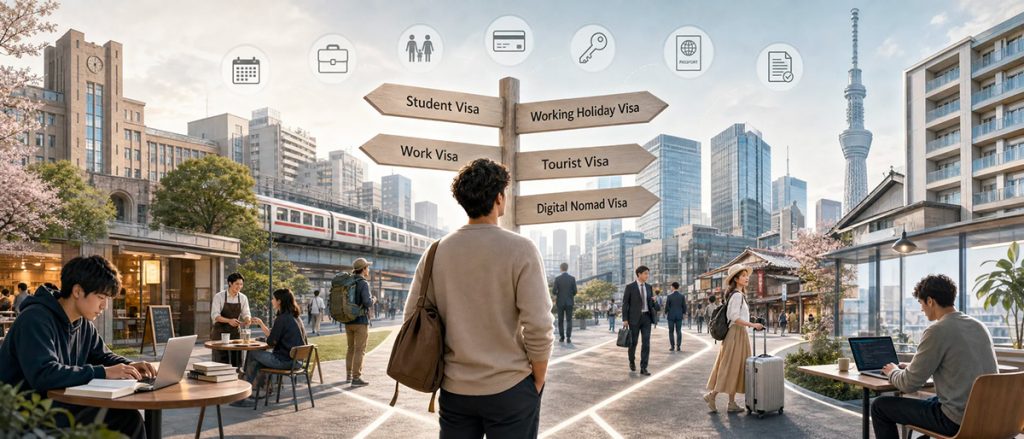
Your Japan visa does much more than allow you to enter the country. It defines what you’re legally allowed to do after you arrive.
Depending on your immigration status, your visa can determine:
- Whether you can legally work in Japan.
- How many hours you’re allowed to work.
- How long you can stay.
- Whether you can renew your stay.
- If you can bring your family.
- Whether you can switch to another visa later.
- Which documents you’ll need to rent an apartment, open a bank account or complete administrative procedures.
For example, a Student Visa allows eligible students to work part-time after obtaining permission, while a standard tourist stay does not allow any paid work. Likewise, a Working Holiday Visa offers much more flexibility than a traditional work visa, but it’s only available to citizens of eligible countries and usually cannot be renewed.
Choosing the wrong visa can lead to unnecessary delays, rejected applications or having to restart the immigration process. Spending a few minutes understanding your options now can save you weeks or even months later.
Do you need a Japan Visa?
Whether you need a Japan visa depends on your nationality, the purpose of your trip and how long you plan to stay. While citizens of many countries can enter Japan without applying for a visa in advance for short visits, anyone planning to study, work or live in Japan will usually need the appropriate long-term visa before traveling.
Understanding this distinction is essential. A visa-free entry for tourism does not give you the right to work, study long-term or settle in Japan. If your goal is to start a new life in the country, you’ll almost certainly need to apply for the correct visa before your departure.
Who can enter Japan without a Visa?
Japan has visa exemption agreements with dozens of countries and regions, allowing eligible travelers to visit for tourism, business meetings or other short-term activities without obtaining a visa in advance.
The length of stay varies depending on your nationality, but it is commonly between 15 to 180 days.
During a visa-free stay, visitors are generally allowed to:
- Travel for tourism.
- Visit friends or family.
- Attend conferences or business meetings.
- Explore Japan before deciding to relocate.
However, you cannot:
- Work for a Japanese employer.
- Receive a salary from a company based in Japan.
- Enroll in long-term educational programs.
- Live in Japan permanently.
- Obtain a Residence Card through a tourist stay.
If you’re planning to relocate, visa-free entry should not be considered an alternative to obtaining the appropriate long-term visa.
When do you need a Japan Visa?
In general, you’ll need a Japan visa if you plan to:
- Study at a university or language school.
- Accept a job with a Japanese employer.
- Participate in a Working Holiday program.
- Launch or manage a business in Japan.
- Join your spouse or family.
- Stay in Japan for an extended period.
- Work remotely under Japan’s Digital Nomad Visa framework, if eligible.
Each situation corresponds to a different visa category, with its own eligibility criteria and supporting documents. Choosing the right one from the beginning can save you significant time during the application process.
Short-Term Stay vs Long-Term Stay
One of the biggest misconceptions among first-time visitors is assuming that entering Japan is the same as being allowed to live there.
The difference is simple:
| Short-Term Stay | Long-Term Stay |
|---|---|
| Tourism or business visits | Study, work or live in Japan |
| Usually visa-free for eligible nationalities | Requires a long-term visa |
| No Residence Card | Residence Card issued after arrival |
| No employment permitted | Employment depends on your visa status |
| Temporary stay only | Renewable in many cases |
If your objective is to move to Japan rather than simply visit, you should focus on obtaining the appropriate long-term visa instead of relying on a tourist stay.
What if you’re not sure?
If you’re still unsure whether you need a visa, start by asking yourself two simple questions:
- Why am I going to Japan?
- How long do I plan to stay?
If you’re staying for only a short holiday, you may qualify for visa-free entry depending on your nationality.
If you’re planning to study, work, build your career or start a new chapter of your life in Japan, you’ll most likely need one of the long-term visas covered in the next sections of this guide.
In the following chapter, we’ll compare every major Japan visa side by side to help you quickly identify the one that best matches your situation.
Japan Visa Types Explained
Japan offers a wide range of visa categories, each designed for a specific purpose. Whether you’re coming to study, work, start a business or join your family, choosing the right visa is the first step toward a successful relocation.
Not every visa offers the same rights or opportunities. Some require sponsorship from a Japanese employer or educational institution, while others are based on your nationality, family relationship or professional background.
To help you choose the right option, here’s a quick recommendation based on your situation.
Japan Student Visa
The Student Visa is one of the most popular long-term visas for foreigners moving to Japan. Whether you’re planning to attend a Japanese language school, university, vocational school or graduate program, this visa allows you to legally live in Japan for the duration of your studies.
For many international students, obtaining a Student Visa is the first step toward building a future in Japan. It not only allows you to study full-time but can also open the door to part-time work, professional opportunities after graduation and, eventually, a long-term career in the country.
Who Can Apply for a Student Visa?
You may be eligible for a Student Visa if you have been accepted into a recognized educational institution in Japan, such as:
- A Japanese language school.
- A university.
- A junior college.
- A vocational school (Senmon Gakkō).
- A graduate school.
- A specialized training college.
Before applying for your visa, your school must first issue or help you obtain a Certificate of Eligibility (COE), one of the most important documents required by Japanese immigration authorities. We’ll explain the COE in detail later in this guide.
Student Visa Requirements
Although requirements may vary slightly depending on your school and country of residence, applicants are generally expected to provide:
- A valid passport.
- A completed visa application form.
- A recent passport-sized photo.
- A Certificate of Eligibility (COE).
- An official Letter of Acceptance from a Japanese educational institution.
- Proof that you can financially support yourself during your stay.
- Additional documents requested by the Japanese embassy or consulate in your country.
Providing complete and accurate documentation significantly increases the chances of a smooth application process.
How long is a student Visa valid?
Student Visas are typically issued for one of the following periods:
- 6 months
- 1 year
- 1 year and 3 months
- 2 years
- 2 years and 3 months
- 3 years
- 4 years
The validity generally depends on the length of your academic program. If your studies continue beyond your initial period of stay, you can usually apply for an extension before your current status expires.
Can you work with a student visa?
Yes, but under certain conditions.
A Student Visa does not automatically allow you to work. Before starting any paid job, you must obtain a Permission to Engage in Activity Other Than That Permitted by the Status of Residence Previously Granted from Japan’s Immigration Services Agency.
Once approved, most students may work:
- Up to 28 hours per week during academic terms.
- Up to 40 hours per week during designated school holidays.
Working beyond these limits or accepting unauthorized employment may result in penalties, including the cancellation of your residence status.
How long does the application process take?
The overall process usually begins several months before your intended arrival.
A typical timeline looks like this:
- Apply and receive admission from a Japanese school.
- The school applies for your Certificate of Eligibility (COE).
- Once the COE is issued, you submit your visa application to the Japanese embassy or consulate in your home country.
- After approval, you receive your visa and can prepare for your move to Japan.
Because admission periods are highly competitive, it’s recommended to start preparing your application at least four to six months before your planned departure.
Can you stay in Japan after graduation?
Yes, in many cases.
Many international graduates choose to remain in Japan by changing their residence status after completing their studies.
For example, if you receive a job offer from a Japanese company, you may be able to switch from a Student Visa to an appropriate Work Visa without leaving Japan, provided you meet the eligibility requirements.
This makes studying in Japan an excellent pathway for those hoping to build a long-term career in the country.
Finding student housing in Japan
Securing accommodation is one of the biggest challenges international students face before arriving in Japan.
Many traditional landlords require Japanese guarantors, long-term contracts or significant upfront costs, making the rental process difficult for newcomers.
Fortunately, furnished accommodations designed for international students are becoming increasingly popular. They often include flexible lease terms, fully furnished rooms and simplified booking procedures, allowing students to settle in quickly after receiving their visa.
If you’re preparing to study in Japan, we recommend starting your housing search as soon as your school confirms your admission. The best accommodations near universities and language schools are often reserved months before each semester begins.
Japan Work Visa

The Work Visa is the most common pathway for foreigners who want to build a professional career in Japan. Unlike short-term visitors or students, this visa category allows eligible foreign professionals to legally work for a Japanese company or organization while living in the country.
However, Japan does not have a single “Work Visa” that applies to everyone. Instead, there are several work-related residence statuses, each designed for specific professions, qualifications and career paths.
Choosing the right category depends on your education, professional experience, job offer and the type of work you will perform in Japan.
Who needs a Work Visa in Japan?
You generally need a Work Visa if you plan to:
- Accept a full-time job with a Japanese company.
- Work for a foreign company while being assigned to Japan.
- Provide professional services in Japan.
- Build a long-term career in the country.
A tourist stay or visa-free entry does not allow you to work for a Japanese employer. If you want to earn income while living in Japan, you must have a residence status that specifically permits employment.
Main types of work Visa in Japan
Japan offers several professional visa categories. The most common ones include:
| Work Visa Category | Designed For | Examples of Jobs |
|---|---|---|
| Engineer / Specialist in Humanities / International Services | Professionals with specialized skills | IT, engineering, marketing, translation, finance |
| Instructor | Education professionals | Teachers in schools and educational institutions |
| Professor | Academic professionals | University researchers and professors |
| Researcher | Scientific professionals | Research institutions and laboratories |
| Skilled Labor | Experienced specialists | Chefs, craftsmen and technical specialists |
| Specified Skilled Worker (SSW) | Workers in designated industries | Hospitality, construction, caregiving, manufacturing |
| Highly Skilled Professional | Highly qualified professionals | Researchers, managers, advanced specialists |
Among these categories, Engineer / Specialist in Humanities / International Services is one of the most widely used options for foreign professionals working in Japan.
Japan Work Visa Requirements
Although requirements vary depending on the visa category, most applicants need to meet several key conditions:
- A valid job offer from a Japanese employer.
- Educational qualifications or professional experience related to the position.
- A Certificate of Eligibility (COE).
- A valid passport.
- Completed visa application documents.
- Proof of professional background when required.
In many cases, your employer plays an important role in the process by supporting your application and applying for the COE on your behalf.
How to get a Work Visa in Japan
The typical process follows these steps:
1. Find a job in Japan
The first step is securing an employment offer from a company willing to hire you and support your immigration process.
Many foreigners find opportunities through:
- International recruitment platforms.
- Japanese companies hiring global talent.
- University career programs.
- Networking and professional connections.
2. Obtain a Certificate of Eligibility (COE)
After receiving a job offer, your employer usually applies for your COE through the Japanese Immigration Services Agency.
The COE confirms that you meet the requirements for your intended residence status.
3. Apply for Your Visa
Once your COE is approved, you can submit your visa application to the Japanese embassy or consulate in your country of residence.
4. Move to Japan and Receive Your Residence Card
After arriving in Japan, eligible foreign residents receive a Residence Card, which serves as their official identification document during their stay.
How long is a Japan Work Visa valid?
A Work Visa is usually granted for:
- 1 year
- 3 years
- 5 years
The exact period depends on your job, employer, immigration history and other factors.
If you want to continue working in Japan after your visa expires, you must apply for a renewal before the expiration date.
Can you change jobs with a Work Visa?
Yes, but there are important conditions.
A Work Visa is linked to the type of professional activity you are authorized to perform, not necessarily to one specific company.
This means you can usually change employers as long as your new position remains within the activities allowed by your residence status.
However, you must:
- Notify immigration authorities when required.
- Ensure your new position matches your visa category.
- Avoid starting unauthorized work.
Changing to a completely different career field may require changing your residence status.
Bringing your family to Japan
Many foreign professionals holding a Work Visa can bring eligible family members through a Dependent Visa.
Dependents may include:
- Spouse.
- Children.
The conditions and work permissions for dependents differ from the main applicant and should be checked carefully before planning a family relocation.
Finding housing after receiving a Work Visa
Receiving a job offer is an exciting milestone, but finding accommodation can still be challenging for foreign professionals moving to Japan.
Traditional rental contracts often involve:
- Large upfront payments.
- Japanese guarantor requirements.
- Complex paperwork.
- Long-term commitments.
For newcomers, furnished apartments can provide a smoother transition, especially during the first months after arrival. They allow professionals to focus on settling into their new job and adapting to life in Japan without dealing with complicated rental procedures immediately.
Whether you are moving to Tokyo, Osaka, Kyoto or another major city, preparing your housing plan early can make your relocation much easier.
Japan Working Holiday Visa

The Working Holiday Visa is one of the easiest ways for young foreigners to experience life in Japan while having the flexibility to work and travel at the same time.
Unlike traditional work visas, the Working Holiday Visa is designed around cultural exchange rather than long-term employment. It allows eligible young travelers to stay in Japan for an extended period while taking temporary jobs to support their journey.
For many people, it is the perfect first step toward discovering Japan, improving their Japanese skills, building international experience and deciding whether they would like to pursue a longer-term future in the country.
Who can apply for a Working Holiday Visa?
The Working Holiday Visa is available to citizens of countries and regions that have a bilateral agreement with Japan.
Eligibility requirements vary depending on your nationality, but applicants generally need to:
- Be between 18 and 30 years old (some countries allow applicants up to 35).
- Hold citizenship from an eligible country or region.
- Be traveling primarily for holiday purposes.
- Have a valid passport.
- Dispose sufficient funds to support themselves when arriving.
- Have no serious criminal record.
- Meet health and insurance requirements.
Because agreements differ by country, always check the latest requirements with the Japanese embassy or consulate in your country before applying.
What can you do with a Working Holiday Visa?
The biggest advantage of the Working Holiday Visa is its flexibility.
During your stay, you can:
- Travel throughout Japan.
- Take temporary or part-time jobs.
- Experience Japanese culture and daily life.
- Improve your language skills.
- Build international work experience.
- Explore whether Japan is the right country for a longer-term move.
Common jobs for Working Holiday participants include:
- Hospitality and tourism.
- Restaurants and cafés.
- Retail.
- Seasonal work.
- Language-related jobs.
- Freelance or temporary opportunities (depending on your situation).
However, the primary purpose of your stay must remain travel and cultural exchange. It is not designed as a replacement for a standard employment visa.
How long can you stay in Japan with a Working Holiday Visa?
The length of stay depends on your nationality, but most Working Holiday Visas allow foreigners to stay in Japan for up to:
One year
Some countries may have additional options, such as:
- Multiple entries.
- Longer stays.
- Extensions or second Working Holiday opportunities under specific agreements.
The exact conditions depend on the agreement between Japan and your home country.
How to apply for a Working Holiday Japan Visa
The application process is generally simpler than other long-term visas.
A typical process includes:
1. Check Your Eligibility
Before applying, confirm you:
- Your country is part of Japan’s Working Holiday program.
- Meet the age requirements.
- Have the required financial resources.
- Understand the conditions of the program.
2. Prepare Your Documents
Common documents include:
- Passport.
- Visa application form.
- Passport photo.
- Resume or personal history.
- Travel plan or statement explaining your purpose.
- Proof of financial resources.
- Health insurance documents (if required).
3. Submit Your Application
Applications are usually submitted through the Japanese embassy or consulate responsible for your country of residence.
Processing times vary, but many applications are completed within a few weeks.
Can you work full-time with a working holiday Japan Visa?
The Working Holiday Visa allows you to work, but it is important to understand its purpose.
Unlike a standard Work Visa, your employment is considered a way to support your travels rather than the main reason for your stay.
This means you generally have more flexibility regarding the type of jobs you can accept, but certain restrictions apply.
For example, work in industries considered inappropriate for cultural exchange programs may be prohibited.
Finding housing during your working holiday in Japan
Finding the right accommodation is often one of the first challenges Working Holiday participants face.
Many travelers arrive in Japan without a long-term employment contract or local guarantor, making traditional apartment rentals difficult. Standard Japanese leases can require:
- Japanese-language paperwork.
- Long contracts.
- Large upfront costs.
- Local guarantors.
For this reason, many Working Holiday travelers choose flexible housing options such as furnished apartments, co-living spaces or short-to-mid-term rentals.
A furnished home allows you to arrive in Japan, unpack immediately and focus on exploring the country, finding a job and adapting to your new environment.
Whether you plan to spend your year in Tokyo, Osaka, Kyoto or another Japanese city, securing accommodation before arrival can make your transition much smoother.
Can you stay in Japan after a Working Holiday Japan Visa?
Yes, in some cases.
Many Working Holiday participants decide to remain in Japan after discovering the country and building connections.
Possible next steps include:
- Switching to a Work Visa after receiving a job offer.
- Changing to a Student Visa to continue studying Japanese.
- Applying for another appropriate residence status if eligible.
The Working Holiday Visa can therefore become more than a travel experience. For many foreigners, it is the first step toward creating a long-term future in Japan.
Japan Digital Nomad Visa

The Japan Digital Nomad Visa is a new option designed for remote workers who want to experience life in Japan while continuing to work for a company or clients located outside the country.
For many professionals, freelancers and entrepreneurs, this visa creates an opportunity to combine international work with the unique experience of living in Japan for several months. It is particularly attractive for people who want to explore Japanese culture, enjoy a high quality of life and test what living in Japan could look like before making a permanent move.
Unlike traditional work visas, the Digital Nomad Visa is not designed for people seeking employment with a Japanese company. Instead, it allows eligible remote workers to temporarily stay in Japan while earning income from abroad.
Who can apply for the Japan Digital Nomad Visa?
The Digital Nomad Visa is designed for foreign nationals who meet specific requirements, including:
- Working remotely for an overseas company.
- Being self-employed with clients outside Japan.
- Meeting the required income threshold.
- Holding valid health insurance coverage.
- Coming from an eligible country or region.
Applicants may include:
- Remote employees.
- Freelancers.
- Business owners.
- Entrepreneurs working with international clients.
Because this visa category is relatively new, requirements and eligible nationalities should always be verified with official Japanese immigration sources before applying.
Japan Digital Nomad Visa Requirements
To apply, applicants generally need to prepare documents proving their eligibility.
Common requirements include:
- A valid passport.
- Visa application form.
- Proof of remote employment or business activity.
- Evidence of annual income meeting the minimum requirement.
- Proof of international health insurance.
- Documents explaining your professional situation.
The purpose of these requirements is to confirm that applicants can financially support themselves without entering the Japanese labor market.
How long can you stay in Japan with a Digital Nomad Visa?
The Digital Nomad Visa allows eligible remote workers to stay in Japan for a limited period.
Unlike many traditional residence statuses, it is designed as a temporary stay rather than a pathway toward permanent residency.
Important points to understand:
- The maximum stay is limited.
- Extensions may not be available in the same way as other visas.
- Family members may have separate eligibility conditions.
For remote workers who want to experience Japan before committing to a long-term relocation, it can be an ideal opportunity to test daily life in the country.
Can you work in Japan with a Digital Nomad Visa?
Yes, but only within the specific framework of the visa.
The Digital Nomad Visa allows you to continue your remote professional activities for companies or clients outside Japan.
However, you generally cannot:
- Accept employment from a Japanese company.
- Enter the Japanese labor market.
- Work locally without obtaining another appropriate residence status.
If your goal is to build a career with a Japanese employer, a traditional Work Visa will usually be more suitable.
Digital Nomad Visa vs Work Visa
Many foreigners confuse these two options, but they serve different purposes.
| Digital Nomad Japan Visa | Work Japan Visa |
|---|---|
| Designed for remote workers | Designed for employment in Japan |
| Income comes from outside Japan | Employer is usually based in Japan |
| Temporary stay | Renewable long-term residence |
| No Japanese employer required | Japanese employer sponsorship often required |
| Ideal for testing life in Japan | Ideal for building a career in Japan |
Choosing between these two options depends mainly on your professional goals.
If you want to experience Japan while keeping your current international career, the Digital Nomad Visa may be the right choice. If you want to work for a Japanese company and establish yourself long-term, a Work Visa is usually the better option.
Finding Accommodation as a Digital Nomad in Japan
Housing is one of the biggest considerations for digital nomads arriving in Japan.
Unlike traditional residents, digital nomads often need:
- Flexible lease periods.
- Fully furnished apartments.
- Reliable internet connection.
- Convenient locations close to transportation.
- Simple move-in procedures.
Traditional Japanese rentals can be challenging for short-term residents because they often involve long contracts, extensive paperwork and upfront costs.
For this reason, furnished apartments and flexible housing solutions are increasingly popular among international remote workers.
Whether you want to spend a few months exploring Tokyo’s neighborhoods, experience Osaka’s lifestyle or enjoy Kyoto’s cultural atmosphere, choosing accommodation that matches your visa duration can make your stay significantly easier.
Is the Japan Digital Nomad Visa right for yzou?
The Digital Nomad Visa is a great option if you want to:
- Experience living in Japan without a permanent commitment.
- Continue working remotely.
- Explore Japanese culture and lifestyle.
- Test different cities before making a long-term move.
However, if your goal is to study, work for a Japanese company or settle permanently, another residence status will likely be more appropriate.
Understanding your long-term goals is the key to choosing the right Japan visa and creating a successful relocation plan.
Japan Business Manager Visa
The Business Manager Visa is designed for foreigners who want to establish, operate or manage a business in Japan. It is one of the main pathways for entrepreneurs who want to move to Japan and actively participate in the management of a company.
Unlike a regular Work Visa, which is usually based on employment with an existing company, the Business Manager Visa allows eligible foreigners to run their own business activities in Japan.
For international entrepreneurs, this visa can be the foundation for building a long-term presence in Japan, creating local opportunities and developing a business connected to the Japanese market.
Who needs a Business Manager Visa in Japan?
You may need a Business Manager Visa if you plan to:
- Start a company in Japan.
- Manage an existing Japanese business.
- Open a branch office.
- Operate a startup.
- Invest in and run a business in Japan.
Simply owning shares in a Japanese company is usually not enough. Immigration authorities focus on whether you are actively involved in managing and operating the business.
Japan Business Manager Visa Requirements
Obtaining this visa requires careful preparation because applicants must demonstrate that their business is legitimate, financially viable and properly established.
Common requirements include:
- A clear business plan.
- A registered company or appropriate business structure in Japan.
- A dedicated office space.
- Proof of sufficient financial investment.
- Evidence that the business can realistically operate in Japan.
- Documents proving your management role.
One of the most important requirements is having a suitable business location. Unlike some other visa categories, operating a business from a purely residential address may not always satisfy immigration requirements.
Minimum investment requirements
Traditionally, applicants are expected to demonstrate a significant financial commitment to their business.
The commonly referenced requirement is:
- Approximately ¥5 million in capital investment
However, immigration requirements can vary depending on the structure of your business and your specific situation.
Applicants should carefully verify the latest requirements before preparing their application.
How to apply for a Business Manager Visa
The application process usually involves several important steps:
1. Create a Business Plan
Your business plan should explain:
- Your business concept.
- Target customers.
- Revenue model.
- Market strategy.
- Financial projections.
- Operational structure.
A realistic and detailed plan can significantly strengthen your application.
2. Establish your business in Japan
Many applicants need to:
- Register a company.
- Secure an office.
- Complete necessary administrative procedures.
The exact process depends on your business structure.
3. Apply for a Certificate of eligibility (COE)
The COE confirms that you meet the requirements for your intended residence status.
Once approved, you can proceed with your visa application through the Japanese embassy or consulate.
4. Move to Japan and begin operations
After approval, you can enter Japan and begin managing your business according to the conditions of your residence status.
How long is the Business Manager Visa valid?
The Business Manager Visa is generally issued for:
- 1 year.
- 3 years.
- 5 years.
The validity period depends on factors such as:
- Business stability.
- Company performance.
- Immigration history.
- Compliance with Japanese regulations.
Renewal requires demonstrating that the business continues to operate successfully.
Can you bring your family with a Business Manager Visa?
Yes. Eligible family members may be able to join you in Japan through a Dependent Visa.
This can include:
- Spouse.
- Children.
However, dependent family members have their own conditions regarding work permissions and activities allowed in Japan.
Business Manager Visa vs Work Visa
Many entrepreneurs hesitate between these two options.
| Business Manager Visa | Work Visa |
|---|---|
| For running your own business | For working for an employer |
| You manage company operations | You perform professional activities |
| Requires business establishment | Usually requires a job offer |
| Suitable for entrepreneurs | Suitable for employees |
The right choice depends on whether your goal is to create your own business in Japan or join an existing organization.
Finding Housing before starting your business in Japan
Entrepreneurs moving to Japan often face the same housing challenges as other foreigners.
Before their business is fully established, they may not yet have:
- Japanese income history.
- Local references.
- A Japanese guarantor.
- Familiarity with rental procedures.
Flexible furnished apartments can provide a practical solution during the transition period, allowing entrepreneurs to settle in Japan while completing business registration, opening bank accounts and preparing their operations.
For founders and international professionals, choosing a convenient location with access to business districts, transportation and daily amenities can make the first months in Japan much easier.
Is the Business Manager Visa right for you?
This visa is a good option if your goal is to:
- Build a company in Japan.
- Launch a startup.
- Manage a local business.
- Develop commercial opportunities in the Japanese market.
However, it requires serious preparation, financial planning and a realistic business strategy.
Understanding your professional goals before applying is essential to choosing the right Japan visa and creating a successful long-term plan in Japan.
Japan spouse visa

The Spouse Visa is one of the most flexible residence statuses available for foreigners who want to live in Japan with their Japanese partner or family member.
Unlike many other visa categories, this status provides broader freedom regarding employment and daily life in Japan. For many foreigners, obtaining a Spouse Visa can also become an important step toward building a long-term future in the country.
However, eligibility depends on your personal situation, your relationship with your spouse and the supporting documents you can provide to Japanese immigration authorities.
Who can apply for a spouse visa in Japan?
You may be eligible for a Spouse Visa if you are married to:
- A Japanese citizen.
- A permanent resident of Japan.
- A special permanent resident of Japan.
Marriage alone does not automatically guarantee approval. Immigration authorities carefully review whether the relationship is genuine and whether the applicant can establish a stable life in Japan.
Japan spouse visa requirements
The application process focuses on proving both your relationship and your ability to live together in Japan.
Common documents include:
- A valid passport.
- Completed visa application forms.
- Marriage certificate.
- Family register documents (for Japanese spouses).
- Certificate of Eligibility (COE), when applicable.
- Photos and evidence showing the authenticity of the relationship.
- Proof of financial stability.
- Additional documents requested by immigration authorities.
Depending on your situation, immigration officers may review factors such as:
- How long you have known each other.
- Communication history.
- Living arrangements.
- Financial situation.
- Future plans in Japan.
Can you work with a spouse visa in Japan?
Yes.
One of the biggest advantages of a Spouse Visa is that it generally provides unrestricted access to employment.
Unlike many other residence statuses, holders can usually:
- Work full-time.
- Change jobs freely.
- Work in different industries.
- Start a business.
This flexibility makes the Spouse Visa significantly different from work-specific residence statuses, which limit employment activities to certain professional categories.
How long is a spouse visa valid?
A Spouse Visa is typically issued for:
- 6 months.
- 1 year.
- 3 years.
- 5 years.
The exact duration depends on factors such as:
- Length of marriage.
- Relationship stability.
- Financial situation.
- Immigration history.
Before your residence period expires, you must apply for a renewal if you wish to continue living in Japan.
Can you get permanent residence with a spouse visa?
Yes, a Spouse Visa can provide a pathway toward Permanent Residence in Japan.
The timeline depends on your individual circumstances, including:
- How long you have lived in Japan.
- How long you have been married.
- Your financial stability.
- Your compliance with Japanese laws and tax obligations.
In some cases, spouses of Japanese citizens may qualify for Permanent Residence under more favorable conditions compared with other foreign residents.
Spouse visa vs other Japan visas
The main difference between a Spouse Visa and many other residence statuses is the level of flexibility it provides.
| Spouse Visa | Other Japan visas |
|---|---|
| Broad work freedom | Work may be restricted by visa category |
| Based on family relationship | Based on study, employment or business |
| Possible pathway to permanent residence | Requirements vary depending on status |
| No employer sponsorship required | Many visas require a sponsor |
For foreigners who are married to a Japanese citizen or eligible resident, this visa is often the most suitable option for building a stable life in Japan.
Finding housing with a spouse visa in Japan
Although having a Spouse Visa can make some administrative procedures easier, finding an apartment in Japan can still be challenging for newcomers.
Foreign residents may still encounter:
- Japanese-language rental contracts.
- Guarantor requirements.
- Large initial costs.
- Different expectations from landlords.
Preparing your housing search early can make the transition smoother, especially if you are moving to major cities such as Tokyo, Osaka or Kyoto.
For couples relocating to Japan, furnished apartments can also be a practical temporary solution while they search for a long-term home and complete their local administrative procedures.
Is a spouse visa right for you?
A Spouse Visa is one of the best options if your goal is to:
- Live with your partner in Japan.
- Build a long-term life in the country.
- Work without major employment restrictions.
- Eventually apply for Permanent Residence.
However, every situation is different. Before applying, make sure you understand the requirements, prepare strong supporting documents and choose the residence status that best matches your long-term plans in Japan.
Permanent residence in Japan
Permanent Residence (PR) is the highest level of long-term residency available to most foreigners living in Japan. Unlike temporary residence statuses, Permanent Residence allows eligible foreigners to stay in Japan indefinitely without renewing their visa status.
For many expatriates, obtaining Permanent Residence represents the final step toward building a stable future in Japan. It provides greater freedom, long-term security and fewer administrative restrictions compared with other residence statuses.
However, Permanent Residence is not automatically granted. Applicants must demonstrate a strong immigration history, financial stability and a commitment to following Japanese laws and social obligations.
Who can apply for permanent residence in Japan?
Permanent Residence is generally available to foreigners who have established a long-term life in Japan and meet specific eligibility requirements.
Common applicants include:
- Foreign professionals who have lived and worked in Japan for several years.
- Highly Skilled Professionals who qualify for accelerated pathways.
- Spouses of Japanese citizens or permanent residents.
- Long-term residents who have maintained a stable life in Japan.
Each application is reviewed individually by Japanese immigration authorities.
Japan permanent residence requirements
While requirements may vary depending on your situation, applicants generally need to demonstrate:
- A stable source of income.
- Good conduct and compliance with Japanese laws.
- Proper payment of taxes and social insurance.
- A sufficient period of residence in Japan.
- A strong reason for wanting to continue living in Japan.
Immigration authorities may review:
- Employment history.
- Income stability.
- Tax records.
- Pension and insurance payments.
- Family situation.
- Overall contribution to Japanese society.
Maintaining accurate records throughout your stay is essential because past administrative issues can affect your application.
How long do you need to live in Japan before applying for Permanent Residence?
The required residence period depends on your personal situation.
Common pathways include:
Standard pathway
Many foreigners generally need to have lived in Japan continuously for around 10 years, including several years under a qualifying work or residence status.
Spouse pathway
Foreign spouses of Japanese citizens or permanent residents may qualify under shorter requirements if they meet specific conditions related to marriage and residence history.
Highly Skilled Professional pathway
Highly Skilled Professionals may qualify for a faster route depending on their points and professional profile.
The exact timeline depends on your residence status, personal circumstances and current immigration rules.
Benefits of Permanent Residence in Japan
Permanent Residence provides several important advantages:
No visa renewal requirement
Unlike temporary residence statuses, Permanent Residents do not need to renew their residence status periodically.
More employment freedom
Permanent Residents can generally work in any industry without being restricted to a specific professional category.
Easier access to loans and financial services
A permanent status can improve your ability to:
- Apply for mortgages.
- Access financial services.
- Make long-term investments.
Greater long-term stability
Permanent Residence provides additional security for foreigners who plan to make Japan their permanent home.
Permanent Residence vs Japanese citizenship
They are are not the same.
| Permanent Residence | Japanese citizenship |
|---|---|
| Keep your original nationality | Usually requires giving up previous nationality depending on your situation |
| No need to renew residence status | Become a Japanese citizen |
| No voting rights in national elections | Full citizenship rights |
| Continue as a foreign national | Become legally Japanese |
Many foreigners choose Permanent Residence because it provides most of the practical benefits of long-term residency while allowing them to keep their original nationality.
Can Permanent Residents sponsor family members?
Permanent Residents may have more flexibility regarding family life in Japan, but family members still need to meet the appropriate immigration requirements.
The process depends on:
- Relationship with the applicant.
- Current immigration status.
- Personal circumstances.
If you are planning to relocate with your family, understanding the available visa options before moving is essential.
Finding housing as a Permanent Resident in Japan
Permanent Residence can make some aspects of renting easier because it demonstrates long-term stability in Japan.
However, foreign residents may still encounter challenges such as:
- Japanese rental procedures.
- Property-specific requirements.
- Documentation requests.
Whether you are renting temporarily after arrival or searching for a permanent home, understanding the Japanese housing system is an important part of successfully settling in Japan.
For newcomers, flexible furnished apartments can provide a practical solution during the transition period, allowing time to explore neighborhoods, understand local rental practices and find the right long-term home.
Is Permanent Residence the right goal for you?
Permanent Residence is an excellent option if you want to:
- Build a permanent future in Japan.
- Gain more freedom in your professional life.
- Reduce immigration-related paperwork.
- Establish deeper roots in Japanese society.
However, it requires patience, preparation and a strong long-term record in Japan.
For many foreigners, the journey starts with a Student Visa, Working Holiday Visa or Work Visa before eventually leading toward Permanent Residence.
Highly Skilled Professional Visa
The Highly Skilled Professional Visa is a special residence status designed to attract highly qualified foreign talent to Japan. It offers additional benefits compared with standard work-related residence statuses, making it one of the most attractive options for international professionals looking to build a long-term career in Japan.
This visa is based on a points-based system that evaluates factors such as education, professional experience, salary, age, research achievements and other qualifications.
For eligible applicants, the Highly Skilled Professional Visa can provide faster access to Permanent Residence, greater career flexibility and additional benefits for family members.
Who can apply for a Highly Skilled Professional Visa?
The Highly Skilled Professional Visa is mainly designed for three categories of professionals:
- Advanced academic researchers.
- Highly specialized technical professionals.
- Business managers and executives.
Typical applicants include:
- Engineers and technology specialists.
- Researchers and university professionals.
- Financial and business experts.
- International managers.
- Entrepreneurs meeting the required criteria.
Unlike a standard Work Visa, this status rewards applicants based on their overall professional profile rather than only their specific job category.
Japan Highly Skilled Professional Visa points system
To qualify, applicants must reach the required number of points under Japan’s immigration points system.
Points are awarded based on factors such as:
- Academic background.
- Professional experience.
- Annual salary.
- Age.
- Japanese language ability.
- Research achievements.
- Professional qualifications.
- Career accomplishments.
The three main categories are:
Advanced academic research activities
For researchers and academics involved in:
- University research.
- Scientific projects.
- Specialized studies.
Advanced specialized or technical activities
For professionals working in fields such as:
- Engineering.
- Information technology.
- Finance.
- International business.
- Specialized services.
Advanced business management activities
For executives and entrepreneurs managing businesses in Japan.
Benefits of the Highly Skilled Professional Visa
This visa offers several advantages compared with standard work-related residence statuses.
Faster pathway to Permanent Residence
One of the biggest benefits is accelerated access to Permanent Residence.
Depending on your points score, you may qualify after a significantly shorter period of residence compared with the standard pathway.
Greater professional flexibility
Highly Skilled Professionals may benefit from more flexibility when conducting multiple professional activities compared with traditional work categories.
Better family benefits
Eligible family members may receive additional advantages, including expanded opportunities compared with standard dependent statuses.
Possibility to bring domestic help
Under certain conditions, highly skilled professionals may be allowed to bring a foreign domestic worker to Japan.
How to apply for a Highly Skilled Professional Visa
The application process generally follows these steps:
1. Confirm your eligibility
First, calculate your points based on:
- Education.
- Experience.
- Salary.
- Professional achievements.
- Other qualifying factors.
2. Prepare supporting documents
You will typically need evidence proving:
- Academic qualifications.
- Employment history.
- Salary details.
- Professional certifications.
- Research achievements when applicable.
3. Obtain a Certificate of Eligibility (COE)
If applying from outside Japan, your sponsor or relevant organization usually helps prepare the COE application.
4. Apply for your visa
Once approved, you can submit your visa application to the Japanese embassy or consulate.
Highly Skilled Professional Visa vs Work Visa
Many professionals wonder whether they should apply for a standard Work Visa or aim for Highly Skilled Professional status.
| Highly Skilled Professional Visa | Standard Work Visa |
|---|---|
| Based on a points system | Based mainly on job category |
| Designed for top-level professionals | Designed for general foreign workers |
| Faster PR pathway possible | Standard PR requirements apply |
| Additional family benefits | More limited benefits |
| Requires stronger qualifications | More accessible |
For highly qualified professionals, this visa can provide significant long-term advantages.
Maintaining your Highly Skilled Professional status
Like other residence statuses, holders must continue meeting immigration requirements.
This includes:
- Maintaining eligible professional activities.
- Reporting required changes.
- Following Japanese laws.
- Meeting administrative obligations.
Failure to maintain eligibility may affect your residence status.
Finding housing as a Highly Skilled Professional in Japan
Highly skilled professionals moving to Japan often have different housing needs compared with students or short-term visitors.
Many look for:
- Convenient locations near business districts.
- High-quality furnished apartments during relocation.
- Flexible options while their family settles in.
- Homes suitable for longer-term living.
Although a strong professional profile can make some administrative procedures easier, the Japanese rental system can still be unfamiliar for first-time residents.
Preparing your housing plan before arrival allows you to focus on your career transition and enjoy a smoother start in Japan.
Is the Highly Skilled Professional Visa right for you?
This visa is an excellent option if you:
- Have advanced qualifications or professional experience.
- Want to build a long-term career in Japan.
- Aim for faster access to Permanent Residence.
- Want additional benefits for your family.
For ambitious professionals, the Highly Skilled Professional Visa can be one of the fastest routes to creating a stable future in Japan.
Certificate of Eligibility (COE)
The Certificate of Eligibility (COE) is one of the most important documents in the Japan visa application process for foreigners planning to stay in Japan for the long term.
Although it is not a visa itself, the COE confirms that you meet the basic requirements for a specific residence status in Japan. In most cases, obtaining a COE before applying for your visa makes the process faster and smoother.
For many foreigners moving to Japan, the COE is the first major administrative step toward starting their new life in the country.
What is a Certificate of Eligibility in Japan?
A Certificate of Eligibility is an official document issued by Japan’s Immigration Services Agency.
It confirms that the applicant meets the requirements for a specific residence status, such as:
- Student Visa.
- Work Visa.
- Business Manager Visa.
- Dependent Visa.
- Other long-term residence statuses.
The COE does not give you permission to enter Japan by itself. Instead, it allows you to apply for your visa at a Japanese embassy or consulate with confirmation that your planned activities in Japan have already been reviewed by immigration authorities.
Think of the process like this:
COE approval → Visa application → Entry into Japan → Residence Card issuance
Who needs a Certificate of Eligibility?
Most foreigners applying for a long-term Japan visa will need a COE.
Common examples include:
- International students accepted by Japanese schools.
- Employees hired by Japanese companies.
- Entrepreneurs establishing businesses.
- Family members joining residents in Japan.
- Researchers and professionals relocating for work.
However, short-term visitors entering Japan for tourism or business purposes generally do not need a COE.
How to get a Certificate of Eligibility
The COE application process usually involves a sponsor or representative in Japan.
Depending on your situation, the applicant may be supported by:
- A Japanese university or language school.
- A Japanese employer.
- A family member living in Japan.
- A business representative.
The typical process is:
1. Prepare your documents
Required documents depend on your residence status, but may include:
- Passport information.
- Application forms.
- Academic records.
- Employment documents.
- Financial proof.
- Supporting documents from your sponsor.
2. Submit the COE application
The application is usually submitted to the regional Immigration Services Agency office in Japan.
3. Wait for approval
Processing times vary depending on:
- Residence status.
- Application volume.
- Completeness of documents.
- Immigration office workload.
4. Receive your COE and apply for your visa
Once approved, the COE is sent to you or your sponsor. You can then submit your visa application at the Japanese embassy or consulate in your country of residence.
How long does a Certificate of Eligibility take?
Processing times can vary significantly depending on the type of application and the time of year.
In general, applicants should expect:
- Several weeks to a few months for processing.
- Longer waiting periods during busy periods, such as university enrollment seasons.
Because the COE is required before applying for many long-term visas, it is important to start the process early.
For students, this often means beginning several months before the start of their academic program. For professionals, employers usually begin preparations soon after the job offer is confirmed.
How long is a Certificate of Eligibility valid?
A COE is generally valid for a limited period after issuance.
Applicants must usually use it within:
3 months after the date of issuance
If the COE expires before you complete your visa application and travel to Japan, you may need additional procedures.
Always check the latest requirements before making travel arrangements.
Can you enter Japan without a COE?
In some situations, it may be possible to apply for a Japan visa without first obtaining a COE. However, for many long-term residence categories, having a COE is strongly recommended because it simplifies the application process.
Without a COE:
- The visa review process may take longer.
- Additional documents may be requested.
- Approval may require more detailed examination.
For most foreigners planning to study, work or live in Japan, obtaining a COE is the standard and recommended pathway.
Common COE mistakes to avoid
Many delays happen because applicants underestimate the importance of the COE process.
Common mistakes include:
- Starting too late.
- Submitting incomplete documents.
- Providing inconsistent information.
- Not preparing sufficient financial evidence.
- Booking travel before immigration approval.
Preparing carefully from the beginning can significantly reduce unnecessary delays.
COE and finding accommodation in Japan
Many foreigners start searching for housing before receiving their final visa approval.
However, understanding your immigration timeline is important when planning your move.
Your COE, visa approval and arrival date can affect:
- When you can enter Japan.
- When you can sign a rental contract.
- What documents landlords may request.
- Which housing options are available.
For international students, professionals and newcomers, flexible furnished housing can be a practical solution while completing immigration procedures and settling into daily life in Japan.
Starting your housing search early allows you to compare neighborhoods, understand rental requirements and secure accommodation before demand increases.
Key takeaways about the Certificate of Eligibility
The COE is not a visa, but it is a crucial step for most foreigners planning a long-term stay in Japan.
Remember:
- The COE confirms your eligibility for a residence status.
- It is usually required before applying for a long-term visa.
- A sponsor in Japan often helps with the application.
- It should be obtained before making final relocation plans.
Understanding the COE process is one of the most important steps toward successfully obtaining your Japan visa and starting your new life in Japan.
How to apply for a Japan visa
Applying for a Japan visa can seem complicated at first, especially if it is your first time dealing with Japanese immigration procedures. However, the process becomes much easier when you understand the main steps and prepare your documents in advance.
The exact procedure depends on your purpose of stay and the type of visa you are applying for. A Student Visa, Work Visa, Business Manager Visa or Spouse Visa may require different documents and different supporting organizations.
In most cases, the process follows a similar structure:
Choose your visa type → Prepare documents → Obtain a Certificate of Eligibility (if required) → Submit your application → Receive your visa → Enter Japan
Step 1: Choose the right Japan visa category
The first step is identifying which visa matches your situation.
Your choice depends mainly on:
- Why you want to move to Japan.
- How long you plan to stay.
- Whether you want to work.
- Your professional or academic background.
- Your family situation.
For example:
- Students usually apply for a Student Visa.
- Employees need a Work Visa.
- Remote workers may qualify for a Digital Nomad Visa.
- Entrepreneurs may need a Business Manager Visa.
- Spouses of Japanese citizens may apply for a Spouse Visa.
Choosing the wrong category can lead to delays or rejection, so it is important to confirm your eligibility before preparing your application.
Step 2: Prepare the required documents
The documents required depend on your visa type, but most applicants will need some combination of the following:
- Valid passport.
- Visa application form.
- Passport-sized photographs.
- Certificate of Eligibility (COE), when required.
- Proof of purpose of stay.
- Financial documents.
- Academic records.
- Employment documents.
- Supporting documents from your sponsor.
Additional documents may be requested depending on your nationality, personal situation and the Japanese embassy processing your application.
A common reason for delays is submitting incomplete or inconsistent information. Preparing your documents carefully from the beginning can make the process significantly smoother.
Step 3: Obtain a Certificate of Eligibility (COE)
For most long-term residence statuses, the COE is an essential step before applying for your visa.
The process usually works as follows:
- Your sponsor in Japan submits the COE application.
- Immigration authorities review your eligibility.
- The COE is issued if approved.
- You use the COE to apply for your visa.
Your sponsor depends on your situation:
- School for students.
- Employer for workers.
- Family member for certain family-related visas.
- Business representative for entrepreneurs.
The COE confirms that your planned activities in Japan meet immigration requirements.
Step 4: Submit your Japan visa application
Once your documents are ready, you can submit your application to the Japanese embassy or consulate responsible for your place of residence.
Depending on your country, you may need to:
- Apply in person.
- Schedule an appointment.
- Submit additional documents.
- Attend an interview.
Processing procedures vary between locations, so always check the instructions provided by your local Japanese diplomatic mission.
Step 5: Wait for visa approval
Processing times depend on several factors:
- Visa category.
- Application volume.
- Completeness of your documents.
- Embassy workload.
Many applications are processed within several working days once all required documents are submitted, but some cases may take longer, especially when additional verification is required.
Avoid making irreversible travel arrangements until your visa has been approved.
Step 6: Travel to Japan and complete arrival procedures
After receiving your approved visa, you can prepare your move to Japan.
When entering Japan, immigration authorities will verify your documents and, if eligible, issue your Residence Card.
Your Residence Card is an important document that you will use for many daily procedures, including:
- Renting an apartment.
- Opening a bank account.
- Registering your address.
- Accessing local services.
How early should you apply for a Japan visa?
The ideal timeline depends on your situation, but planning early is always recommended.
A general timeline:
| Students | 4-6 months before arrival |
| Employees | Immediately after receiving a job offer |
| Entrepreneurs | Several months before your planned relocation |
| Working Holiday applicants | Before your planned departure date and within your eligibility period |
Starting early gives you enough time to handle unexpected delays and prepare other parts of your relocation, including housing.
Common Japan visa application mistakes
Many applicants experience delays because of avoidable mistakes.
Common issues include:
- Applying for the wrong visa category.
- Submitting incomplete documents.
- Providing incorrect information.
- Waiting too long before starting the process.
- Ignoring embassy instructions.
- Booking flights before receiving approval.
- Forgetting that immigration requirements can change.
Careful preparation is one of the best ways to increase your chances of a smooth application.
Preparing your move after visa approval
Receiving your Japan visa is a major milestone, but it is only the beginning of your relocation journey.
Before arriving, you should also prepare:
- Accommodation.
- Transportation from the airport.
- Initial budget.
- SIM card or mobile plan.
- Bank and administrative procedures.
- Local neighborhood information.
Finding housing early is especially important in popular cities such as Tokyo, Osaka and Kyoto, where demand for international-friendly apartments can be high.
Flexible furnished housing can help newcomers transition smoothly, especially during the first weeks or months while they adapt to life in Japan.
By understanding each step of the application process and preparing ahead of time, you can approach your move with confidence and focus on enjoying your new life in Japan.
How to renew your Japan visa
If you want to continue living in Japan after your current period of stay expires, you will usually need to apply for a renewal of your residence status before the expiration date.
Many foreigners refer to this process as “renewing their Japan visa”, but technically, you are usually renewing your period of stay rather than receiving a completely new visa. The procedure is handled by Japan’s Immigration Services Agency and allows eligible residents to continue their activities under the same residence status.
Whether you are a student, employee, entrepreneur or family member living in Japan, understanding the renewal process is essential to maintaining your legal status.
When should you renew your Japan visa?
You should start preparing your renewal application before your current period of stay expires.
In general, applications can usually be submitted from around:
3 months before your expiration date
Starting early is strongly recommended because processing times can vary depending on:
- Your residence status.
- The immigration office handling your application.
- The number of applications being processed.
- Whether additional documents are required.
Waiting until the last minute can create unnecessary stress and may affect your ability to continue certain activities in Japan.
What documents do you need to renew a Japan visa?
The required documents depend on your residence status.
However, most applicants need:
- Completed application form.
- Passport.
- Residence Card.
- Recent photograph.
- Proof of current activities in Japan.
- Supporting documents related to your status.
Additional documents may include:
For students
- Certificate of enrollment.
- Academic records.
- Proof of attendance.
- Financial support documents.
For employees
- Employment certificate.
- Company information.
- Tax documents.
- Proof of salary.
For business owners
- Company financial records.
- Business activity reports.
- Tax documents.
- Proof that the company remains operational.
For family-related visas
- Documents proving family relationship.
- Financial support information.
- Updated personal documents.
Always verify the latest requirements before submitting your application, as immigration procedures can change.
How does the Japan visa renewal process work?
The renewal process generally follows these steps:
1. Prepare your documents
Collect all required documents based on your residence status.
Make sure all information is accurate and consistent with your previous applications.
2. Submit your application
Applications are submitted to the regional Immigration Services Agency office responsible for your area of residence.
Depending on the location, waiting times can vary significantly.
3. Wait for the result
Immigration authorities review whether:
- you maintained your eligibility.
- you followed Japanese laws.
- your activities match your residence status.
- your financial situation remains stable.
4. Receive your updated Residence Card
If approved, your new period of stay will be updated and reflected on your Residence Card.
Can you stay in Japan while your renewal is processing?
Yes, in many cases.
If you submit your renewal application before your current period of stay expires, you can generally remain in Japan while waiting for the decision under the applicable extension period.
However, you should always confirm your specific situation with immigration authorities, especially if your expiration date is approaching.
What can cause a Japan visa renewal rejection?
Although many renewals are approved, problems can occur if applicants no longer meet the requirements of their residence status.
Common issues include:
- Insufficient income.
- Unpaid taxes or social insurance.
- Long periods without the permitted activity.
- Unauthorized work.
- Missing documents.
- Inconsistent information.
Maintaining good records throughout your stay is the best way to avoid complications during renewal.
Can you renew any type of Japan visa?
Most long-term residence statuses can be renewed if you continue meeting the requirements.
This commonly includes:
- Student Visa.
- Work Visa.
- Business Manager Visa.
- Spouse Visa.
- Dependent Visa.
- Highly Skilled Professional Visa.
However, some temporary categories have different rules. For example, short-term visitor statuses and certain temporary programs may not follow the same renewal process.
Renewing your visa and planning your life in Japan
Renewing your residence status is not only an administrative procedure. It is also an opportunity to evaluate your long-term plans in Japan.
Many foreigners use this moment to consider:
- Changing careers.
- Moving to a different city.
- Switching from a Student Visa to a Work Visa.
- Applying for Permanent Residence.
- Finding more suitable long-term housing.
As your life in Japan becomes more stable, your housing needs may also change. Some residents move from short-term furnished apartments to long-term rentals, while others continue choosing flexible housing options depending on their lifestyle.
Planning your next steps before your current status expires allows you to continue building your future in Japan with confidence.
How to change your Japan visa status in Japan
Many foreigners arrive in Japan with one type of residence status and later discover that their long-term plans have changed.
A student may receive a job offer after graduation. A Working Holiday participant may decide to build a career in Japan. A digital nomad may want to transition into a work-based residence status. In these situations, changing your Japan visa status may allow you to continue living in Japan without leaving the country.
Technically, this process is called a Change of Status of Residence rather than changing your visa. Your residence status defines what activities you are legally allowed to perform while living in Japan.
When can you change your Japan visa status?
You may need to apply for a change of status if your situation changes and your current residence status no longer matches your activities.
Common examples include:
- Student Visa → Work Visa after finding employment.
- Student Visa → Business Manager Visa after starting a company.
- Working Holiday Visa → Work Visa after receiving a job offer.
- Dependent Visa → Work Visa after becoming employed.
- Short-term stay → Student Visa in specific situations.
The important rule is that you must obtain approval before starting activities that are not permitted under your current status.
How to change from a Student Visa to a Work Visa
This is one of the most common pathways for international students in Japan.
Many foreigners follow this route:
- Study at a Japanese university, language school or vocational school.
- Find employment with a Japanese company.
- Confirm that your job matches an eligible work category.
- Apply to change your residence status.
- Begin working after approval.
The new position must meet immigration requirements, including factors such as:
- Job category.
- Educational background.
- Professional experience.
- Salary conditions.
Receiving a job offer does not automatically allow you to start working. You must wait until your status change is approved.
How to change from a Working Holiday Visa to another status
Many Working Holiday participants discover that they want to stay longer after experiencing life in Japan.
Possible options may include:
- Changing to a Work Visa after securing employment.
- Applying for a Student Visa to continue studying.
- Switching to another eligible residence status.
The possibility of changing status depends on your personal situation, nationality and eligibility requirements.
How to change from a Tourist Stay to a long-term visa
Changing from a short-term visitor status to a long-term residence status inside Japan can be more complicated.
In many cases, foreigners are expected to complete the visa application process from outside Japan after obtaining the necessary approval documents.
However, exceptions may exist depending on individual circumstances.
If you are considering this pathway, it is important to confirm your options with immigration authorities before making plans.
Documents required to change your residence status
The required documents depend on your new residence status.
Common documents may include:
- Application form for Change of Status of Residence.
- Passport.
- Residence Card.
- Certificate of Eligibility (when applicable).
- Employment contract.
- Company documents.
- School documents.
- Proof of financial situation.
- Additional supporting documents.
Submitting complete and accurate documents is one of the most important factors for a smooth application.
How long does a change of status take?
Processing times vary depending on:
- The type of residence status.
- The immigration office.
- Application volume.
- Complexity of your case.
Some applications may be completed relatively quickly, while others require additional review.
During this period, it is important to continue following the rules of your current residence status.
Can you work while waiting for a status change?
No, not automatically.
Submitting a change of status application does not necessarily give you permission to start new activities immediately.
For example:
- A Student Visa holder cannot start full-time employment simply because they received a job offer.
- A Working Holiday participant cannot assume a new work status before approval.
Always wait for official approval before beginning activities outside your current permitted status.
Common mistakes when changing your Japan visa status
Many foreigners encounter problems because they start the process too late or misunderstand their current permissions.
Common mistakes include:
- Applying after your current status expires.
- Starting unauthorized work.
- Choosing an unsuitable residence category.
- Missing required documents.
- Assuming approval is automatic.
- Waiting until graduation or expiration dates are too close.
Preparing early gives you more flexibility and reduces unnecessary stress.
Planning your next step after changing your status
Changing your residence status is often a major milestone in your life in Japan.
It may represent a transition such as:
- Student to professional.
- Temporary resident to long-term resident.
- Traveler to permanent resident.
At the same time, your practical needs may also change. Someone arriving as a student may later need a larger apartment closer to their workplace, while a Working Holiday participant may need flexible accommodation before deciding where to settle.
Understanding your immigration pathway early helps you make better decisions about housing, finances and your future in Japan.
A successful move to Japan is not only about obtaining the right Japan visa. It is about building a sustainable life once you arrive.
Renting an apartment in Japan after getting your visa
Getting your Japan visa approved is a major milestone, but it is only the beginning of your relocation journey.
For many foreigners moving to Japan, finding a place to live can be just as challenging as completing immigration procedures. The Japanese rental market has its own rules, requirements and expectations, which can be difficult to understand for newcomers.
Your visa status is an important factor, but it is not the only thing landlords consider when reviewing a rental application.
Does your Japan visa affect your ability to rent an apartment?
Yes.
Your residence status can influence how landlords and rental agencies evaluate your application.
For example:
- A Work Visa may demonstrate stable employment and long-term plans.
- A Student Visa may require additional financial support documents.
- A Working Holiday Visa may make traditional long-term rentals more difficult.
- A Digital Nomad Visa holder may face challenges because of shorter stay periods.
However, having a valid Japan visa does not automatically guarantee that you can rent any apartment.
Many landlords also consider:
- Japanese language ability.
- Employment status.
- Income level.
- Length of stay.
- Availability of a guarantor.
Why is renting in Japan difficult for foreigners?
Japan’s traditional rental system can be challenging for newcomers because many apartments require:
- A Japanese guarantor.
- Employment history in Japan.
- Japanese-language contracts.
- Large initial payments.
- Long-term commitments.
Common upfront costs may include:
- Security deposit (shikikin).
- Key money (reikin).
- Agency fees.
- Insurance fees.
- Cleaning fees.
- Advance rent payments.
For someone arriving from overseas, these requirements can make finding housing before arrival complicated.
Can foreigners rent an apartment before arriving in Japan?
Yes, but the process depends on your situation.
Some traditional rental agencies require applicants to complete procedures after arriving in Japan, while others accept applications from overseas.
International residents often find it easier to choose housing solutions designed specifically for foreigners, especially during their first months in Japan.
These options may offer:
- Online applications.
- English support.
- Furnished apartments.
- Flexible rental periods.
- Clear pricing.
- Simpler move-in procedures.
Best housing options depending on your Japan visa
Your ideal housing solution depends on your reason for moving to Japan.
Students
International students often benefit from:
- Furnished apartments.
- Student-friendly neighborhoods.
- Flexible contracts.
- Locations near universities or language schools.
Many students prefer having accommodation ready before arrival so they can focus on their studies and adaptation to Japan.
Working professionals
Foreign employees usually look for:
- Apartments close to their workplace.
- Longer-term rental options.
- Comfortable living spaces.
- Convenient transportation access.
A furnished apartment can also be useful during the transition period before choosing a permanent home.
Working Holiday travelers
Working Holiday participants often prioritize:
- Flexible lease durations.
- Affordable locations.
- Easy move-in procedures.
- No complicated guarantor requirements.
Because their plans may change during their stay, flexibility is often more important than a traditional long-term contract.
Digital nomads
Remote workers generally need:
- Reliable internet.
- Fully furnished accommodation.
- Short-to-mid-term stays.
- Convenient neighborhoods.
A flexible apartment allows them to experience different cities and lifestyles before deciding whether Japan is the right long-term destination.
When should you start looking for housing in Japan?
The best time to start your housing search depends on your situation.
Generally:
- Students should begin searching after receiving school confirmation.
- Professionals should prepare housing plans after accepting a job offer.
- Working Holiday participants should secure accommodation before arrival when possible.
- Digital nomads should arrange housing before traveling.
Popular areas in Tokyo, Osaka and Kyoto can become highly competitive, especially before university semesters and major relocation periods.
What documents do foreigners need to rent in Japan?
Requirements vary depending on the landlord and housing provider.
Common documents may include:
- Passport.
- Residence Card or visa information.
- Proof of income or financial support.
- Employment certificate.
- Student enrollment certificate.
- Emergency contact information.
Some housing providers may accept applications before you receive your Residence Card, especially if your visa approval and arrival date are confirmed.
Choosing the right place to live after moving to Japan
Your first home in Japan plays an important role in your overall relocation experience.
When choosing accommodation, consider:
- Distance to school or workplace.
- Access to public transportation.
- Monthly budget.
- Neighborhood atmosphere.
- Length of stay.
- Lifestyle preferences.
Tokyo offers endless opportunities but comes with higher costs. Osaka is known for its more relaxed atmosphere and affordability, while Kyoto attracts people looking for culture and traditional Japanese surroundings.
Choosing the right city and neighborhood can make your transition to Japan much smoother.
A smoother start to your new life in Japan
Your visa allows you to enter Japan, but your accommodation allows you to truly start living there.
For many foreigners, choosing a furnished and flexible housing solution removes one of the biggest barriers of relocation. Instead of dealing with complicated rental procedures immediately after arrival, you can focus on adapting to your new environment, exploring your city and building your life in Japan.
Whether you are coming to Japan as a student, professional, entrepreneur or remote worker, planning your housing early is one of the most important steps toward a successful move.
Frequently asked questions about Japan visas
Choosing the right Japan visa can feel overwhelming, especially when you are planning an international move for the first time.
Below are the most common questions foreigners ask before studying, working or starting a new life in Japan.
Questions related to Japan Visa:
Do I need a visa to move to Japan?
Yes, most foreigners who want to live in Japan long-term need an appropriate residence status.
Citizens of many countries can enter Japan without a visa for short-term tourism stays, but this does not allow them to live, work or study long-term in Japan.
What is the easiest Japan visa to get?
The easiest Japan visa depends on your personal situation.
For many young travelers, the Working Holiday Visa is one of the most accessible options because it has fewer requirements compared with work-based visas.
The Student Visa is usually straightforward once you are accepted by a recognized educational institution.
For professionals, the Work Visa process is generally based on securing a qualifying job offer from a Japanese company.
The best option is not necessarily the easiest one, but the one that matches your long-term goals in Japan.
How much does a Japan visa cost?
The cost of a Japan visa depends on:
- Your nationality.
- Visa type.
- Where you apply.
- Whether additional services are required.
Visa fees are generally relatively low compared with the overall cost of relocating to Japan. However, applicants should also consider other expenses such as:
- Document preparation.
- Translation fees.
- Travel costs.
- Insurance.
- Initial housing expenses.
How long does it take to get a Japan visa?
Processing times vary depending on the visa category, your country of application and whether your documents are complete.
A general timeline may include:
- Certificate of Eligibility processing for long-term visas.
- Embassy or consulate visa processing.
- Travel preparation after approval.
Because delays can happen, it is recommended to start your application several months before your planned move whenever possible.
Questions related to Housing:
Can foreigners buy a house without a Japan visa?
Yes, foreigners can generally purchase property in Japan even without a Japanese visa.
However, owning property does not automatically provide the right to live in Japan.
To reside in Japan long-term, you still need an appropriate residence status.
Many foreigners first move to Japan through a Student Visa, Work Visa or another residence category before considering long-term property ownership.
What is the best Japan visa for foreigners who want to stay permanently?
There is no single “best” visa because it depends on your situation.
Common pathways toward long-term residence include:
- Work Visa → Permanent Residence.
- Highly Skilled Professional Visa → faster Permanent Residence pathway.
- Spouse Visa → possible pathway to Permanent Residence.
- Business Manager Visa → long-term business residence.
The best choice depends on your career, family situation and future goals.
Can I change my Japan visa after arriving?
Yes, in many situations.
Foreigners already living in Japan can apply to change their residence status if their circumstances change.
Examples include:
- Student Visa to Work Visa after graduation.
- Working Holiday Visa to Work Visa after finding employment.
- Other eligible residence status changes.
You must receive approval before starting activities outside your current status.
Can I bring my family to Japan?
Yes, many residence statuses allow eligible family members to join you.
Examples include:
- Work Visa holders bringing spouses and children.
- Business Manager Visa holders sponsoring family members.
- Permanent Residents supporting eligible family members.
The exact rules depend on your residence status and your family’s situation.
Final thoughts: choosing the right Japan visa for your future
Getting a Japan visa is more than completing an administrative process. It is the first step toward creating a new chapter of your life in Japan.
Whether you are moving for education, career opportunities, entrepreneurship or personal reasons, choosing the right residence status will determine what you can do and how easily you can build your future in the country.
Take time to understand your options, prepare your documents carefully and plan your relocation step by step.
Once your visa is approved, the next challenge begins: creating a comfortable life in Japan, from choosing the right city and neighborhood to finding a home that matches your lifestyle.
With the right preparation, moving to Japan can become a realistic and rewarding experience.
Related articles
Continue your Japan relocation journey with our other essential guides: