How to choose between traditional vs furnished apartments in Japan? Everything you need to know before you move (2026)

The cheapest apartment isn’t always the one that costs you the least.
Furnished apartments in Japan may look more expensive at first glance, yet end up costing less overall, especially if you’re staying in Japan for less than a year.
Most people moving to Japan compare monthly rent.
The smartest ones compare their total cost of moving, living and leaving.
A traditional apartment might save you ¥20,000 every month, but cost hundreds of thousands of yen before you even receive the keys.
This guide will help you understand the real differences between traditional and furnished apartments, compare their actual costs and choose the option that makes the most sense for your plans.
If you’re in a hurry, here’s the short answer.
| If you’re… | Best option |
| Exchange student | Furnished apartment |
| Working Holiday visa holder | Furnished apartment |
| Intern | Furnished apartment |
| Digital nomad | Furnished apartment |
| First-time resident | Furnished apartment |
| Long-term employee | Depends on your plans |
| Permanent resident | Furnished apartment |
The best apartment isn’t the one with the lowest rent. It’s the one with the lowest total cost for the way you plan to live in Japan.
Why Most People Compare the Wrong Thing
Ask someone moving to Japan which apartment is cheaper and they’ll usually compare one number: monthly rent
However, it’s also where many newcomers make an expensive mistake. Imagine these two apartments in Tokyo.
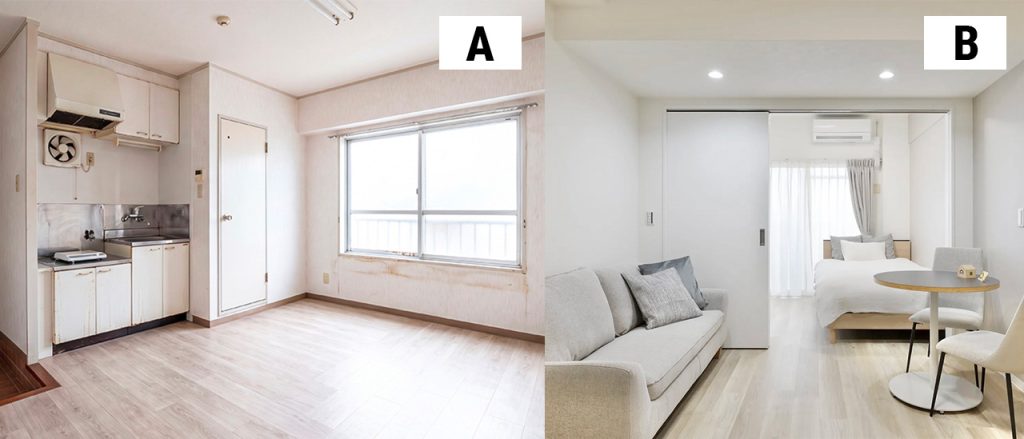
At first glance, Apartment A seems like the obvious choice.
But what if Apartment A also requires:
- two months’ deposit;
- one month’s key money;
- an agency fee;
- a guarantor company fee;
- furniture and appliances;
- internet installation;
- moving costs.
Meanwhile, Apartment B is fully furnished, ready to move into and includes many everyday essentials.
Suddenly, the comparison looks very different.
Monthly rent tells only part of the story.
To choose wisely, you need to compare the total cost of living in each apartment, not just the rent you’ll pay every month.
Before comparing prices, answer these three questions.
1. How long will you stay in Japan?
- Less than 12 months
- 1–3 years
- More than 3 years
The longer you stay, the more a traditional apartment starts to make financial sense.
2. Will you arrive with furniture?
Most international residents don’t.
Buying everything from scratch can quickly become one of the biggest expenses during your first month.
3. Do you value flexibility?
Life changes. You may change university. Accept a new job. Move to another city.
Or simply realize that the neighborhood you chose isn’t the right one. A flexible lease can make those changes much easier.
The Biggest Myth About Furnished Apartments
One of the most common assumptions is that furnished apartments are simply “more expensive.”
That’s only true if you compare monthly rent in isolation.
In reality, housing costs are made up of much more than rent.
A traditional apartment often comes with several one-time expenses before you move in, while a furnished apartment generally includes many of the essentials you’ll need from day one.
For someone staying in Japan for a limited period, paying a slightly higher monthly rent can sometimes reduce the overall cost of the move by eliminating furniture purchases, installation fees and other setup expenses.
That’s why experienced international residents often compare the total cost of their stay, not just the monthly price advertised in a listing.
Compare the Real Cost
Most people compare apartments by looking at the monthly rent.
That’s a mistake.
The smarter comparison is to calculate what you’ll actually spend from the day you move in until the day you move out.
To make this easier, let’s look at three realistic situations faced by people moving to Japan.
The numbers below are examples based on common costs in Tokyo. Actual prices vary depending on the property, location and rental conditions, but the comparison reflects what many newcomers experience.
Scenario 1: Exchange Student Profile (10 Months)
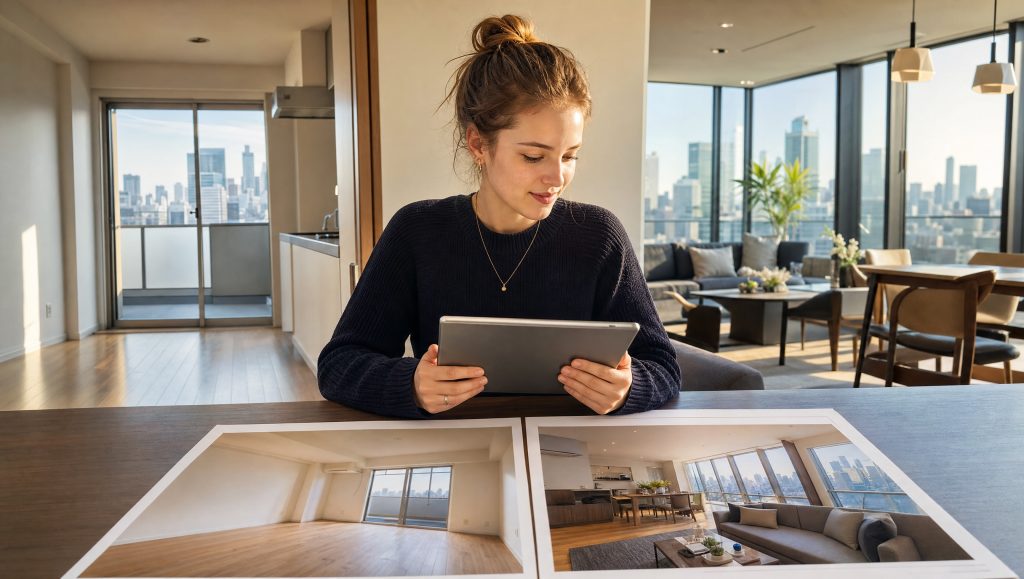
- 📍 Moving from Seoul to Tokyo
- 🎓 Exchange programme
- 📅 Staying for 10 months
- 🛏️ Arriving with one suitcase
- 💻 Needs a furnished place close to public transport
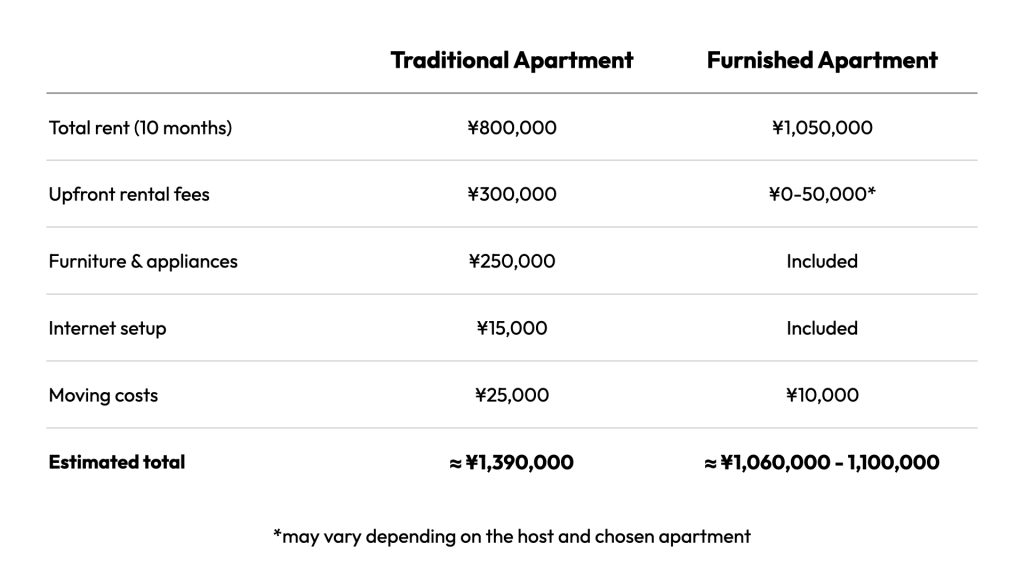
For a stay of around ten months, the furnished apartment is often the more practical option.
While the monthly rent is higher, avoiding furniture purchases and reducing move-in costs can make the overall experience significantly simpler and, in many cases, less expensive.
More importantly, you won’t need to spend your last weeks in Japan selling furniture or arranging disposal before your flight home.
Scenario 2: Working Holiday Visa profile (12 Months)

- 📍 First time living in Japan
- 💼 Looking for part-time work
- 🎒 Wants the freedom to move to another city if an opportunity comes up
A Working Holiday is full of uncertainty.
You might fall in love with Osaka after arriving in Tokyo.
You might decide to spend the ski season in Hokkaido.
Or accept a job in Fukuoka.
Flexibility has real value.
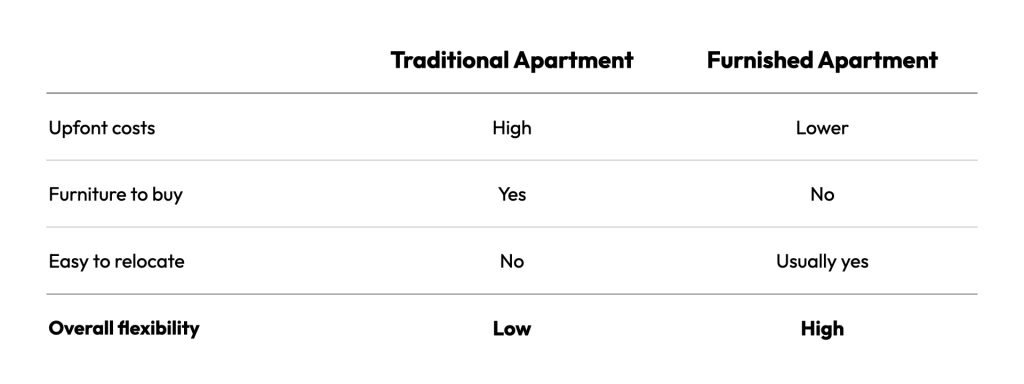
If you’re not yet sure where you’ll spend the entire year, paying a little more each month can be worth it for the flexibility and peace of mind.
Scenario 3: Young Professional profile (5 Years)
- 📍 Moving to Tokyo for a full-time job
- 💼 Employer-sponsored work visa
- 📅 Planning to stay for several years
This is where the comparison starts to shift.
Over several years, the lower monthly rent of a traditional apartment can offset the higher move-in costs.
Buying furniture becomes an investment rather than an expense tied to a short stay.
If you’re confident you’ll stay in the same city for several years, a traditional apartment may offer better long-term value.
That said, many professionals still choose a furnished apartment for their first few months. It gives them time to explore different neighbourhoods, understand commuting times and settle into life in Japan before signing a multi-year lease.
What This Comparison Really Tells Us
The goal isn’t to prove that one option is always better.
It’s to understand when each option makes sense.
| Your situation | Usually the better choice |
| Less than 12 months | Furnished apartment |
| First time in Japan | Furnished apartment |
| Working Holiday | Furnished apartment |
| Exchange student | Furnished apartment |
| Unsure where you’ll live long term | Furnished apartment |
| Staying 3 years+ | Traditional apartment is worth considering |
| Already familiar with Japan | Compare both options |
The cheapest apartment on paper isn’t always the one that leaves you with the most money, or the least stress, by the end of your stay.
A Smarter Way to Start Your Life in Japan
Enkostay makes it easier for foreigners to find verified furnished apartments in Japan with flexible lease terms, transparent pricing, and no traditional rental barriers like key money or large security deposits.
One of the biggest mistakes newcomers make is thinking they need to find their perfect apartment before they even arrive in Japan.
In reality, most people don’t know which neighbourhood they’ll enjoy, how long their daily commute will feel, or even whether their plans will stay the same after a few months.
That’s why many international residents don’t treat their first apartment as a long-term commitment.
They treat it as a starting point.
Beginning with a fully furnished apartment gives you the freedom to settle into Japan without rushing one of the biggest financial decisions you’ll make. You can experience different neighbourhoods, build your routine and understand what you really need before committing to a traditional lease.
For many people, that approach turns out to be both simpler and less stressful.
That’s also the idea behind Enkostay.
Instead of trying to replace Japan’s traditional rental market, we help international residents take the first step with confidence. Our platform lets you compare verified, fully furnished apartments, book your accommodation before arriving in Japan and move into a home that’s ready from day one.
Once you’ve settled into your new life and know exactly where you want to live, you’ll be in a much better position to decide whether a traditional apartment is the right next step.
Sometimes, the smartest housing decision isn’t finding your forever home.
It’s finding the home that helps you start your new life in Japan.
The Bottom Line
There’s no universal “best” apartment in Japan. There’s only the apartment that’s right for where you are today.
If you’re moving to Japan for the first time, staying for less than a year or simply want the easiest possible start, a furnished apartment will usually save you time, reduce stress and make your transition much smoother.
If you’re planning to build your life in Japan for several years, a traditional apartment may become the better long-term investment once you’ve settled in.
The smartest decision isn’t choosing the cheapest rent.
It’s choosing the housing option that gives you the best start.
FAQ
Is a furnished apartment more expensive than a traditional apartment in Japan?
The monthly rent is usually higher, but furnished apartments often have lower upfront costs because furniture, appliances and many move-in essentials are already included. For shorter stays, they can be the more economical choice overall.
Can foreigners rent a traditional apartment in Japan?
Yes. However, many landlords require a Japanese guarantor, proof of income and a longer lease commitment. Requirements vary depending on the property and landlord.
Is a furnished apartment better for students?
In most cases, yes. Students usually stay in Japan for a limited period and benefit from being able to move in immediately without buying or selling furniture.
What type of apartment is best for a Working Holiday in Japan?
A furnished apartment is often the most practical option because it offers greater flexibility and allows you to relocate more easily if your plans change.
Can I book an apartment before arriving in Japan?
Yes. Many furnished apartments can be reserved before arrival, making it easier to move into your accommodation shortly after landing in Japan.
Do furnished apartments include utilities?
It depends on the property. Some include utilities and internet in the monthly rent, while others charge them separately. Always check what’s included before booking.
Is buying furniture in Japan expensive?
It can quickly add up. Even when shopping at budget retailers or buying second-hand, furnishing an apartment often costs significantly more than newcomers expect once delivery, household essentials and appliances are included.
Can I move from a furnished apartment to a traditional apartment later?
Absolutely. In fact, many international residents choose this approach. Starting with a furnished apartment gives you time to discover different neighbourhoods and understand the local rental market before signing a long-term lease.
Related Guides
Continue exploring our Japan Housing Playbooks: