How to calculate your renting budget in Japan? Everything you need to know before you move (2026)

Your monthly rent is only part of the cost.
One of the biggest surprises for foreigners moving to Japan isn’t the monthly rent, it’s the renting budget in Japan required before they even receive the keys. Many newcomers underestimate their renting budget in Japan because they focus only on the monthly rent and overlook the many upfront costs involved.
Depending on the property, your renting budget in Japan may include a security deposit, key money, agency fees, guarantor company fees, fire insurance, and the first month’s rent. Once you add furniture, appliances, utility setup costs, and moving expenses, your renting budget in Japan can quickly become much higher than expected.
The good news is that planning your renting budget in Japan becomes much easier once you understand how the Japanese rental market works and which costs are mandatory, optional, or negotiable.
In this guide, you’ll discover every expense that impacts your renting budget in Japan, learn which fees are common, which ones you may be able to avoid, and estimate how much you should realistically save before renting an apartment in Japan.
Quick renting budget in Japan snapshot
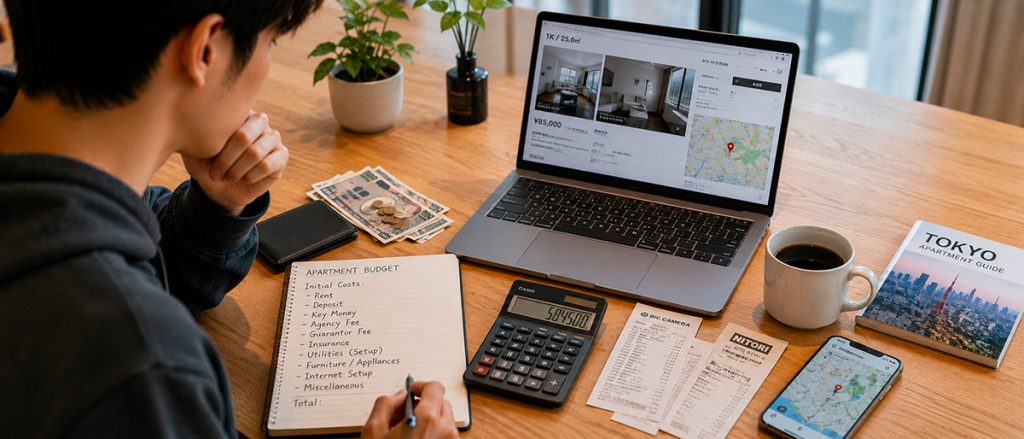
If you’re planning your move, these are the numbers most newcomers should keep in mind.
| Expense | Typical Range |
| Monthly rent | Varies by city and neighborhood |
| Upfront costs (traditional apartment) | Often 4-6 months’ rent |
| Upfront costs (furnished apartment) | Much lower to none (on an indicative basis only) |
| Furnitures & appliances | Often ¥150,000 – ¥400,000 if not included |
| Recommended emergency budget | At least one month’s living expenses |
The biggest mistake isn’t underestimating the rent. It’s underestimating everything around it.
The real renting budget in Japan
When people ask,
“How much does it cost to rent an apartment in Japan?“
they’re usually thinking about the monthly rent.
In reality, that’s only one part of your housing budget.
Before you move in, you may also need to pay a security deposit, key money, an agency fee, a guarantor company fee and insurance. If the apartment is unfurnished, you’ll also need to budget for furniture, appliances and everyday essentials.
That’s why two apartments with similar monthly rent can have completely different move-in costs.
Instead of comparing rent alone, compare your total move-in budget.
Typical Move-In Costs
| Cost | Is it common? | What it covers |
| Monthly rent | Aways | Your monthly housing payment |
| Security deposit | Often | Refundable amount that may cover damages or unpaid rent |
| Key money | Sometimes | A non-refundable payment made to the landlord |
| Agency fee | Often | Fee charged by the real estate agency for arranging the rental |
| Guarantor company fee | Often | Covers the company that guarantees your lease if required |
| Fire insurance | Usually | Basic insurance required by many landlords |
| Furniture & appliances | Depends | Needed if you rent an unfurnished apartment |
| Utilities setup | Depends | Internet, electricity, gaz and water activation fees may apply |
Not every apartment includes every fee. Requirements vary depending on the landlord, property and rental company.
Why Two Apartments With the Same Rent Can Cost Very Different Amounts
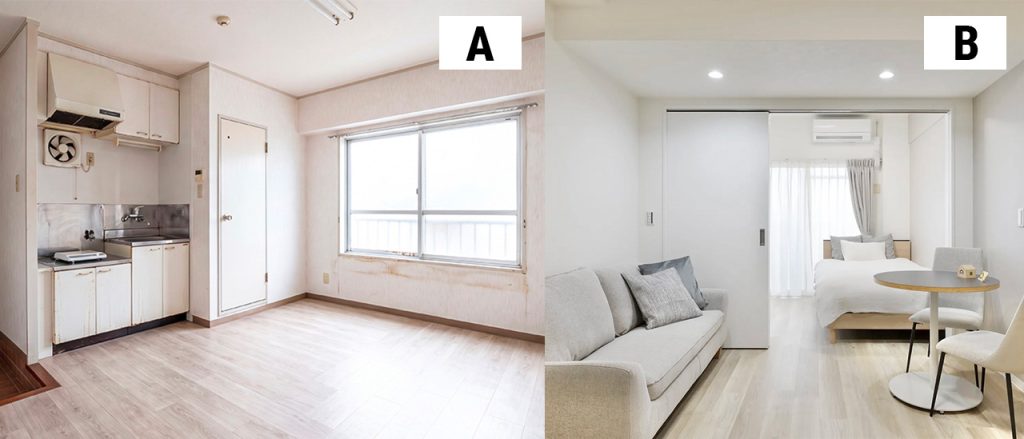
Imagine two apartments in Tokyo, both advertised at a similar monthly price.
One is a traditional apartment with a lower rent but several move-in fees.
The other is fully furnished with a slightly higher monthly rent but fewer upfront expenses.
At first glance, the traditional apartment appears cheaper.
After calculating the full cost of moving in, the result may be very different.
That’s why experienced renters compare the total cost of living in the apartment, not just the number displayed in the listing.
Every fee explained for your renting budget in Japan
Most newcomers expect to pay rent.
What often catches them by surprise are the additional fees required before they can move in.
Not every apartment includes every fee, but understanding the most common ones will help you avoid unpleasant surprises and estimate your budget more accurately.
Security Deposit (Shikikin)
What is it?
A refundable deposit held by the landlord to cover unpaid rent or damage beyond normal wear and tear.
If the apartment is returned in good condition, part—or sometimes all—of the deposit may be refunded after move-out. Cleaning fees or repair costs may be deducted depending on the contract.
Typical cost
Usually 1 to 2 months’ rent, although some properties require less or none at all.
Can you avoid it?
Sometimes. Many furnished apartments and some modern rental properties require a smaller deposit or no deposit.
Key Money (Reikin)
What is it?
Key money is a non-refundable payment made to the landlord when signing the lease.
Unlike the security deposit, this money is not returned when you leave the apartment.
Although key money has become less common in recent years, many traditional apartments still require it.
Typical cost
Usually 0 to 2 months’ rent.
Can you avoid it?
Yes. More and more apartments, especially those aimed at international residents, advertise “No Key Money”.
Agency Fee
What is it?
If you rent through a real estate agency, you’ll usually pay a one-time agency fee for arranging the contract and handling the rental process.
Typical cost
Up to one month’s rent, plus applicable taxes.
Can you avoid it?
Sometimes. Some landlords rent directly or advertise “No Agency Fee” properties.
Guarantor Company Fee
What is it?
Many landlords require tenants to use a guarantor company instead of a personal guarantor.
The guarantor company agrees to cover unpaid rent if necessary, giving landlords additional financial security.
Typical cost
Often 30–100% of one month’s rent for the initial contract, with annual renewal fees depending on the provider.
Can you avoid it?
Sometimes, but many traditional rentals require one. Some furnished housing providers include this service or don’t require it.
Fire Insurance
What is it?
Most rental contracts require tenants to purchase basic fire and liability insurance before moving in.
The policy usually covers accidental damage, fire and certain third-party liabilities during your stay.
Typical cost
Typically ¥15,000–¥25,000 for a two-year policy.
Can you avoid it?
Rarely. It’s a standard requirement for many long-term leases.
Furniture & Appliances
What is it?
Traditional apartments in Japan are often rented completely unfurnished.
That usually means you’ll need to buy essentials such as:
- Bed
- Mattress
- Refrigerator
- Washing machine
- Microwave
- Table and chairs
- Curtains
- Storage furniture
- Kitchen equipment
Even when buying budget furniture or second-hand items, these purchases can significantly increase your initial budget.
Typical cost
Around ¥150,000 to ¥400,000+, depending on the apartment and the quality of the items you choose.
Can you avoid it?
Yes. Furnished apartments already include most of these essentials, allowing you to move in immediately.
Utilities & Internet Setup
What is it?
Before moving into a traditional apartment, you’ll usually need to arrange electricity, gas, water and internet services yourself.
Some providers also charge installation or activation fees.
Typical cost
Costs vary depending on the provider and the services you choose.
Can you avoid it?
Many furnished apartments already have utilities connected or offer internet that’s ready to use, making your move much simpler.
At this point, your renting budget in Japan looks different
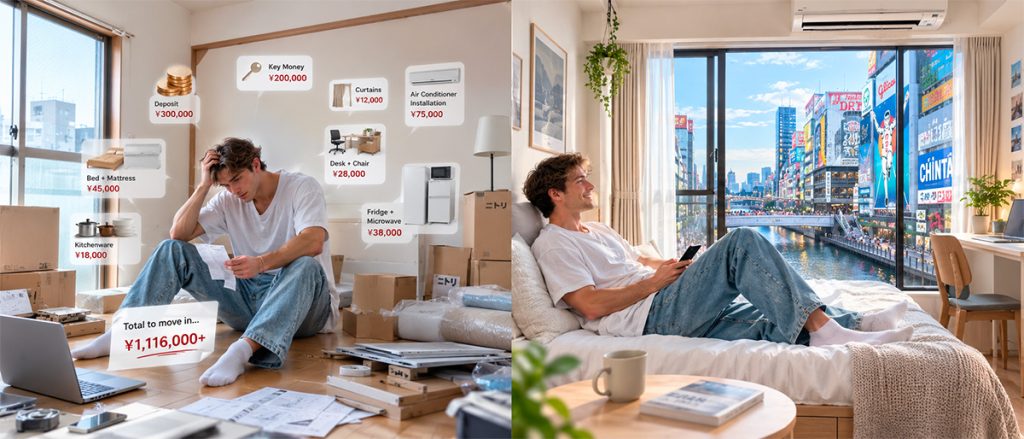
When you only compare monthly rent, a traditional apartment often looks like the cheaper option.
But once you include deposits, key money, agency fees, guarantor fees, furniture, appliances and setup costs, the difference becomes much smaller and in some situations, it can even disappear.
That’s why experienced renters don’t ask:
“What’s the monthly rent?“
They ask:
“What’s the total cost before I can start living there?“
Example of renting budget in Japan : what you’ll actually pay
Reading about deposits, key money and agency fees is useful.
Seeing how they affect your total budget is even better.
The examples below are based on realistic situations that many international residents experience when moving to Japan. The exact figures will vary depending on the city, property and rental conditions, but they provide a reliable starting point for planning your budget.
Scenario 1: Exchange Student (10 Months)
- Moving from South Korea to Tokyo
- Staying for one academic year
- Arriving with one suitcase
- No furniture or appliances
| Expenses | Traditional Apartment | Furnished Apartment |
| Monthly rent (10 months) | ¥800,000 | ¥1,050,000 |
| Security deposit | ¥80,000 | – |
| Key money | ¥80,000 | – |
| Agency fee | ¥80,000 | ¥105,000 |
| Guarantor company | ¥40,000 | – |
| Fire insurance | ¥20,000 | Included |
| Furniture & appliances | ¥220,000 | Included |
| Move-in and Moving costs | ¥20,000 | Minimal |
| Estimated total | ¥ 1,340,000 | ¥ 1,155,000 |
For a stay of less than one year, a furnished apartment often offers better overall value. Although the monthly rent is higher, avoiding major upfront purchases can reduce both your total budget and the stress of moving.
Scenario 2: Working Holiday Visa (12 Months)
- First time living in Japan
- Plans may change during the year
- Wants the flexibility to move if necessary
| Expenses | Traditional Apartment | Furnished Apartment |
| Estimated total (12 months) | ¥ 1,650,000 | ¥ 1,450,000 |
Working Holiday travellers often value flexibility as much as price. A furnished apartment makes it easier to relocate without worrying about selling furniture, ending long leases or paying for another move.
Scenario 3: Young Professional (3+ Years)
- Full-time employee
- Long-term work visa
- Planning to stay in the same city
| Traditional Apartment | Furnished Apartment |
| Higher upfront costs. | Lower initial effort. |
| Lower monthly rent. | Higher monthly rent over several years. |
| Furniture becomes a long-term investment. | – |
If you’re confident you’ll stay in Japan for several years, a traditional apartment can become the more economical option over time. Many professionals still choose a furnished apartment for their first few months, then move into a traditional rental once they know which neighbourhood best fits their lifestyle.
The longer you stay in Japan, the more attractive a traditional apartment becomes. The shorter your stay, the more valuable a furnished apartment usually is.
Cost Isn’t the Only Thing You Should Compare
Two apartments can cost almost the same over the course of your stay while offering completely different experiences.
Ask yourself these questions before making a decision.
- How much flexibility do I need?
- Am I comfortable buying and selling furniture?
- Do I already know which neighbourhood I want to live in?
- How much time do I have before starting university or work?
- Would I rather spend my first week shopping for furniture or exploring my new city?
The best apartment isn’t always the one with the lowest total cost.
It’s the one that makes your move to Japan easier.
Hidden Costs Most Foreigners Forget
By now, you’ve probably estimated your rent, deposit, and agency fees, giving you a good idea of your renting budget in Japan.
However, many newcomers still exceed their renting budget in Japan during their first few weeks after arrival.
Not because they made a mistake, but because dozens of smaller expenses rarely appear in rental guides or budget calculators.
Individually, these costs may seem minor.
Together, they can easily add tens of thousands of yen to your renting budget in Japan, making your move more expensive than expected if you don’t plan for them in advance.
Household Essentials
Even if your apartment includes furniture, you’ll still need to buy everyday items.
This often includes:
- Bedding
- Pillows
- Towels
- Kitchen utensils
- Plates and glasses
- Cleaning supplies
- Laundry basket
- Hangers
- Toilet paper and basic toiletries
Many people forget to include these purchases in their budget because they seem inexpensive. In reality, they add up quickly during your first shopping trip.
Furniture Delivery Costs
Buying furniture is only part of the expense.
Many retailers charge separate delivery fees, especially for large appliances or bulky items such as beds, wardrobes and washing machines.
If you order from multiple stores, you’ll often pay multiple delivery charges.
These extra costs are easy to overlook when comparing furnished and traditional apartments.
Internet Installation
Not every apartment is ready for internet on the day you move in.
Depending on the building and provider, you may need to schedule an installation appointment and wait several days or even weeks before your connection is active.
If you work remotely or study online, this delay can become more than an inconvenience.
Some furnished apartments already include internet or have it ready before you arrive.
Transportation During Your First Weeks
Apartment hunting rarely ends after signing the contract.
Many newcomers spend their first days travelling between furniture stores, electronics shops and administrative appointments.
These transport costs may be small individually, but they quickly become part of your moving budget.
Utility Activation
Electricity, gas and water may require separate activation procedures depending on your apartment.
Some services can be activated online, while others require an appointment.
Gas activation, for example, often requires someone to be present when the service is turned on.
Planning these appointments takes both time and flexibility during your first week.
Furniture Disposal When You Leave
This is one of the most underestimated costs.
Japan has strict rules for disposing of oversized household items.
Beds, desks, wardrobes and many appliances cannot simply be left on the street.
Depending on the city, you’ll usually need to book collection, pay a disposal fee and follow local waste collection procedures.
If you’re leaving Japan permanently, selling everything before your departure also takes time and isn’t always successful.
For short-term residents, this often becomes an unexpected source of stress.
Time Has a Cost Too
Not every expense appears on your bank statement.
Visiting furniture stores, comparing prices, arranging deliveries, waiting for utility installations and completing paperwork all take time.
If you’ve just arrived in Japan, those first days are often better spent opening a bank account, registering your address, starting university or settling into your new job.
Choosing a move-in ready apartment doesn’t just reduce expenses.
It also reduces the number of decisions you need to make during one of the busiest periods of your move.
The biggest hidden cost is often stress
Many newcomers focus on saving money during the apartment search.
That’s understandable.
But saving ¥20,000 on rent doesn’t always feel worthwhile if it means spending your first two weeks assembling furniture, waiting for deliveries and trying to understand contracts in a language you don’t speak.
When comparing apartments, think beyond the price.
Consider how much time, energy and flexibility each option requires.
Sometimes, the apartment that looks more expensive on paper becomes the easier and more valuable choice once every hidden cost is taken into account.
How to reduce your renting budget in Japan
Moving to Japan doesn’t have to cost a fortune.
While some expenses are unavoidable, many of the biggest costs come from decisions made before you even arrive.
Here are the strategies that can make the biggest difference.
Choose the Right Apartment for Your Length of Stay
One of the easiest ways to reduce your renting budget in Japan is choosing a housing option that matches how long you actually plan to stay.
If you’re coming to Japan for six months, buying furniture, paying key money, and signing a long-term lease may significantly increase your renting budget in Japan without providing good value.
On the other hand, if you’re planning to stay for several years, a traditional apartment can help lower your renting budget in Japan over the long term, despite the higher upfront costs.
The goal isn’t simply to find the cheapest apartment.
It’s to choose the apartment that offers the lowest total renting budget in Japan based on your length of stay, lifestyle, and long-term plans.
Avoid Paying for Furniture Twice
Many newcomers buy brand-new furniture as soon as they arrive.
A few months later, they realise they’re moving to another city or returning home.
The result is simple.
They pay to buy everything, then spend time and money trying to sell or dispose of it.
Unless you’re certain you’ll stay in the same apartment for several years, think carefully before investing in large household items.
Look Beyond the Monthly Rent
An apartment that’s ¥10,000 cheaper each month can still end up costing more overall if it requires:
- Key money
- A large security deposit
- Agency fees
- Furniture purchases
- Utility setup costs
Always compare the total move-in cost, not just the advertised rent.
Budget before you start apartment hunting
Knowing your budget before browsing listings helps you avoid wasting time on apartments you can’t realistically afford.
A simple budget should include:
- Monthly rent
- Upfront rental fees
- Furniture and appliances
- Utilities
- Transportation
- Emergency savings
Having a realistic number in mind also makes it easier to compare different housing options objectively.
Don’t Rush Into a Long-Term Lease
Many newcomers feel pressure to choose a permanent home before they’ve even explored the city.
In reality, your first apartment doesn’t need to be your last.
Living in Japan for a few months gives you a much better understanding of commuting times, neighbourhoods and your daily routine.
Making a long-term decision after gaining that experience often leads to a better outcome.
A Furnished Apartment Can Reduce More Than Costs
For many international residents, the biggest benefit of a furnished apartment isn’t simply saving money.
It’s reducing complexity.
When the apartment is already furnished and ready to move into, you can spend your first days in Japan focusing on what really matters:
- Registering your address
- Opening a bank account
- Starting university or work
- Exploring your neighbourhood
- Building your new routine
Instead of coordinating deliveries and assembling furniture, you’re already settling into your new life.
Smart Planning Saves More Than Smart Shopping
Many people spend weeks looking for cheaper furniture or discounted appliances.
Few spend the same amount of time choosing the right housing strategy.
Yet the biggest savings often come from decisions made before signing the lease.
Choosing the right apartment, understanding the total cost and planning ahead will usually have a greater impact on your budget than finding the cheapest sofa in Tokyo.
A Flexible Start Often Leads to Better Decisions
One pattern appears again and again.
Many international residents don’t move directly into their long-term home.
They begin with a flexible solution, learn how they actually live in Japan, then make a more informed decision once they’re settled.
That approach reduces pressure and makes it much easier to choose the right neighbourhood, understand commuting times and avoid signing a lease you’ll later regret.
This is exactly where furnished apartments can play an important role.
They give you time to adapt before making a long-term commitment.
How Enkostay fits into that journey
Enkostay makes it easier for foreigners to find verified furnished apartments in Japan with flexible lease terms, transparent pricing, and no traditional rental barriers like key money or large security deposits.
At Enkostay, we don’t believe every newcomer should rent the same type of apartment.
We believe your housing should match your stage of life.
If you’re arriving in Japan for the first time, our goal is to help you start with a home that’s ready from day one. Every apartment is fully furnished, designed for international residents and can be booked before you arrive, so you can focus on settling into your new life instead of organising furniture deliveries and utility appointments.
Once you’ve experienced life in Japan and know exactly what you’re looking for, you’ll be in a much stronger position to decide whether a traditional apartment is the right next step.
Your first apartment isn’t just where you sleep.
It’s the place that gives you the confidence to build your life in Japan.
Before you sign any lease
No matter which type of apartment you choose, take a few minutes to ask yourself these questions.
- How long am I realistically staying in Japan?
- Do I know which neighbourhood fits my lifestyle?
- Have I calculated the total move-in cost, not just the monthly rent?
- Will I need to buy and dispose of furniture?
- Am I choosing this apartment because it’s genuinely the best fit, or simply because the monthly rent looks lower?
The answers will usually tell you far more than the listing itself.
Frequently Asked Questions
How much money do I need to rent an apartment in Japan?
It depends on the type of apartment you choose. For a traditional apartment, you should often budget the equivalent of four to six months’ rent before moving in. This usually includes the security deposit, key money, agency fee, guarantor fee and other move-in costs.
Why are move-in costs so expensive in Japan?
Unlike many countries, renting a traditional apartment in Japan often involves several one-time fees in addition to your first month’s rent. While not every property requires all of them, it’s important to understand these costs before signing a lease.
Is key money always required?
No, key money has become less common in recent years, especially in properties designed for international residents. Many apartments now advertise “No Key Money”, although it is still common in parts of the traditional rental market.
Is the security deposit refundable?
Usually, yes. The landlord may deduct cleaning fees or repair costs depending on the condition of the apartment and the terms of your lease. Always read the contract carefully to understand how your deposit will be handled.
What’s the biggest budgeting mistake newcomers make?
Focusing only on the monthly rent.
The total cost of renting includes move-in fees, furniture, utilities, insurance and many smaller expenses that are easy to overlook. Planning your complete budget before arriving in Japan can help you avoid unexpected costs.
The bottom line
Renting an apartment in Japan is often more affordable than newcomers expect.
What catches people off guard isn’t the monthly rent. It’s everything that comes before moving in.
The more you understand these costs before you arrive, the easier it becomes to plan your budget, compare different housing options and avoid expensive surprises.
For many international residents, especially students, Working Holiday travellers and people moving to Japan for the first time, reducing complexity is just as important as reducing costs.
That’s why many choose to start with a fully furnished apartment. It allows them to settle in quickly, understand how they want to live in Japan and make long-term housing decisions with confidence.
Whatever option you choose, don’t compare apartments based only on the monthly rent.
Compare the total cost, the flexibility and the lifestyle each one offers.
The best apartment isn’t always the cheapest.
It’s the one that gives you the best start to your life in Japan.
Related Guides
Continue planning your move with these guides:
- How to Rent an Apartment in Japan as a Foreigner (Complete Guide)
- Traditional vs Furnished Apartments in Japan: Choose the Right Home
- What Is Key Money in Japan? Everything You Need to Know
- Best Areas to Live in Tokyo for Students
- How to Avoid Rental Scams in Japan
- How to Find an Apartment in Japan Before You Arrive