Mastering Korean Washing Machines: From Button Translations to Essential Care

Confused by the Korean buttons on your washing machine? Enkostay provides a complete guide on standard cycles, detergent usage, and essential maintenance tips like drain cleaning for expats in Korea.
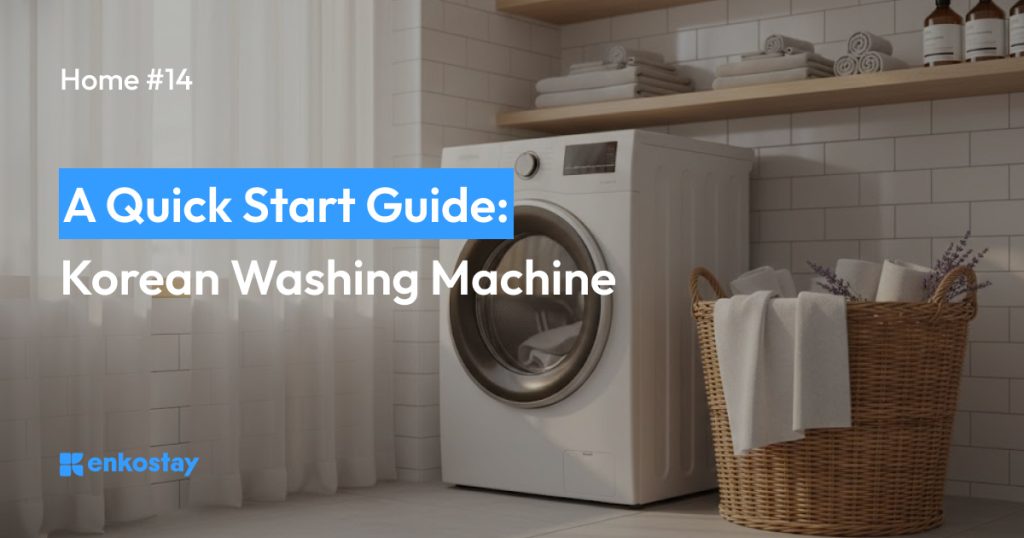
Navigating a Korean washing machine for the first time can be a daunting task. Without an English manual, facing unfamiliar buttons like “Bul-lim” (Soaking) or “Salm-eum” (Boiling) can lead to laundry mishaps. Choosing the wrong cycle can damage delicate fabrics or cause drainage errors. Enkostay is here to guide you through everything from the differences between front-load and top-load machines to practical button usage.
Quick Summary
- Button Usage: The Standard cycle includes washing, rinsing, and spinning, so simply pressing the Start button is usually enough.
- Detergent: Use the left compartment for front-loaders or the dedicated tray for top-loaders; never exceed the ‘MAX’ line for softeners.
- Maintenance: Always leave the door open after washing to prevent mold, and clean the drain filter monthly.
What are the main button terms and how do I use the Standard cycle?
The most important thing to know is that the Standard (표준, pyojun) cycle already includes all washing stages in one go. A common mistake for many expats is thinking they need to press the Wash, rinse, and spin dry buttons sequentially.
- Standard Course: This cycle is a complete set consisting of Wash + rinse (헹굼, henggum) + spin dry (탈수, talsu). Simply turn on the power, select ‘Standard’, and press ‘Start’. The machine will handle everything and beep when finished. There is no need to press additional buttons.
- Customizing: You should only use the individual buttons if you wish to add more rinse cycles (e.g., from 2 to 3) or adjust the spin intensity.
- Caution: The “Boil” (삶음) cycle uses very high temperatures, which can shrink non-cotton clothing. Use it with care.

How do I choose the right detergent and put it in correctly?
The type of detergent and the entry point differ completely depending on whether you have a front-load or top-load machine.
- Front-Load (Drum): Opening the top-left drawer usually reveals three compartments. The widest one is for the main detergent (세제, seje). Look for the blue guide or flower icon for the fabric softener. You must use ‘HE’ or ‘Drum-only’ liquid detergent to prevent excessive suds.
- Top-Load (General): There is often a small tray inside the tub for detergent, or you can pour it directly over the clothes. If your machine doesn’t have a softener dispenser, you must add it manually during the final rinse signal.
- Pro Tip: All detergents and softeners should stay below the ‘MAX’ line. If you exceed it, the liquid will drain out immediately at the start of the wash, losing its effect.
What daily habits will extend the life of my washing machine?
You must leave the door open to ventilate after every wash and clean the filters specific to your machine type regularly.
- Ventilation: Always leave the door and the detergent (세제, seje) drawer open once the wash is done. Removing internal moisture is the only way to prevent mold and unpleasant odors.
- Drain (배수, baesu) Care (Front-load): Open the small cover at the bottom, drain the residual water through the small hose, and then unscrew the round filter to remove lint and debris.
- Lint Filter (Top-load): Detach the plastic lint filters located on the sides of the inner tub and empty the trapped dust. If ignored, lint will start sticking to your clean clothes.
- Gasket Maintenance: For front-loaders, wiping the rubber gasket inside the door with a dry cloth helps prevent slime and mold buildup.
Quick Korean Dictionary
- 표준 (pyojun) : Standard
- 헹굼 (henggum) : Rinse
- 탈수 (talsu) : Spin-dry
- 세제 (seje) : Detergent
- 배수 (baesu) : Drain
Even appliances with unfamiliar labels can become reliable companions once you understand the basics. Enkostay is committed to taking care of even the smallest inconveniences you face while living in Korea. We hope today’s tips make your laundry days lighter and fresher. We are always here, striving to create a better living environment for you. 🏠