What should you absolutely check before renting an apartment in Japan? Complete checklist you need to know (2026)

Moving to Japan is an exciting experience, but before renting an apartment in Japan, there are several important details you shouldn’t overlook. Many first-time renters focus only on the monthly rent, only to discover hidden costs, restrictive lease terms, or missing essentials after they’ve already signed the contract.
The good news is that most of these problems can be avoided by knowing exactly what to look for before making your decision.
Whether you’re moving to Japan as a student, professional, digital nomad, or on a Working Holiday visa, taking the time to evaluate an apartment carefully can save you hundreds of dollars, reduce unnecessary stress, and help you settle into your new home with confidence.
In this guide, we’ll walk you through the 10 most important things to check before renting an apartment in Japan, from understanding the true cost of renting to inspecting the apartment, reviewing the lease, and choosing a location that matches your lifestyle.
By the end of this checklist, you’ll know exactly what to look for before signing your lease and how to avoid the most common mistakes foreigners make when renting in Japan.
Quick answer: What should you check before renting an apartment in Japan?
If you’re short on time, here’s a quick overview of the most important things to check before renting an apartment in Japan.
| What to check | Why it matters |
|---|---|
| Total monthly cost | Rent is only one part of your monthly housing budget. |
| Move-in costs | Initial fees can add several months of rent to your upfront expenses. |
| Furniture and appliances | Replacing missing essentials can be expensive and time-consuming. |
| Lease conditions | Make sure you understand the contract before signing. |
| Apartment condition | Look for maintenance issues that could affect your comfort. |
| Building amenities | Shared facilities can make everyday life easier and more convenient. |
| Neighborhood | Your surroundings will have a major impact on your daily routine. |
| Internet and utilities | Confirm what is already included and what you’ll need to arrange yourself. |
| Questions for the landlord | Clarify important rules before committing to the property. |
| Your lifestyle | Choose an apartment that matches your daily habits and long-term plans. |
The rest of this guide explains each point in detail so you can rent with confidence and avoid unpleasant surprises after moving in.
Why this checklist matters
Renting an apartment in Japan is often very different from renting in other countries. Lease agreements may include unfamiliar fees, some apartments come completely unfurnished, and contract terms can vary significantly depending on the landlord or property management company.
Many foreigners naturally focus on finding the lowest rent, but the cheapest apartment isn’t always the best value. An apartment with lower monthly rent may require you to purchase furniture, pay expensive move-in fees, or spend more time commuting every day.
Before renting an apartment in Japan, taking the time to compare all these factors can save you money, reduce stress, and help you choose a home that fits both your budget and your lifestyle.
In the following sections, we’ll walk through each item you should check before signing a lease, explain why it matters, and share practical tips to help you make the right decision from the very beginning.
1. Calculate the real monthly cost, not just the rent
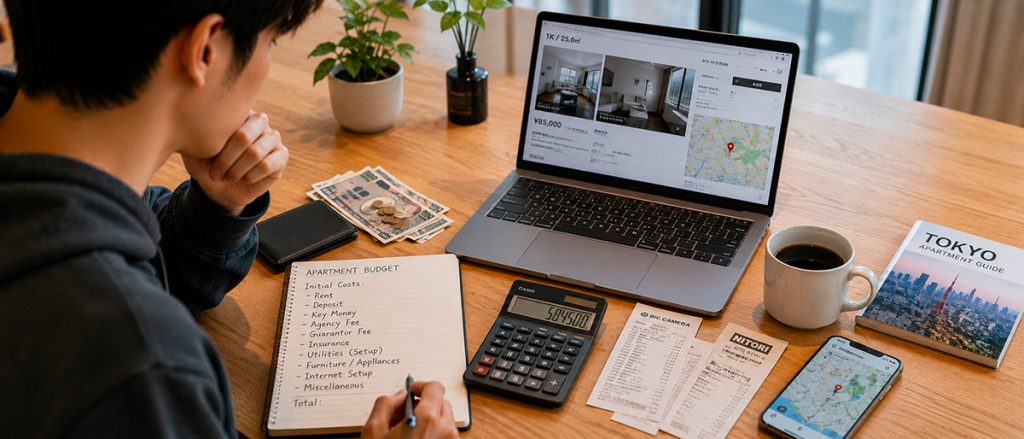
One of the biggest mistakes foreigners make before renting an apartment in Japan is focusing only on the advertised monthly rent. While the rent is the largest expense, it’s rarely the only one you’ll pay every month.
Many rental listings display an attractive price, but additional recurring costs can significantly increase your monthly housing budget. Understanding the total cost before signing a lease will help you compare apartments fairly and avoid unexpected financial surprises.
Here are the most common monthly expenses you should check:
| Monthly expense | What it covers |
|---|---|
| Rent | The base monthly payment for the apartment. |
| Management fee | Building maintenance, shared spaces, and property management. |
| Utilities | Electricity, gas, and water, unless already included. |
| Internet | Some apartments include Wi-Fi, while others require you to arrange your own connection. |
| Parking or bicycle storage | Additional fees may apply depending on the building. |
| Optional services | Furniture rental, cleaning services, or other amenities offered by the property. |
For example, two apartments advertised at ¥80,000 per month may not actually cost the same. One apartment may include internet, furniture, and utilities, while another could require an additional ¥15,000 to ¥25,000 every month for those same essentials.
Instead of comparing rent alone, calculate your estimated monthly housing budget by adding every recurring expense. This gives you a much more accurate picture of what you’ll actually pay throughout your stay.
Pro tip
Ask the landlord or property manager for a complete breakdown of all monthly charges before signing the lease. A transparent rental should clearly explain every recurring fee, leaving no room for unpleasant surprises after you move in.
2. Understand all move-in costs before renting an apartment in Japan
The monthly rent is only one part of the financial commitment. Before renting an apartment in Japan, you should also understand how much you’ll need to pay upfront.
Japan is well known for its move-in costs, and they often surprise foreigners who are renting for the first time. Depending on the property, your initial payment can easily equal four to six months of rent.
Typical move-in costs may include:
| Upfront cost | Description |
|---|---|
| Security deposit | Refundable deposit used to cover potential damages. |
| Key money | A non-refundable payment made to the landlord in some traditional rentals. |
| Agency fee | Commission charged by the real estate agency. |
| First month’s rent | Usually paid before moving in. |
| Guarantor fee | Required if you use a guarantor company instead of a personal guarantor. |
| Cleaning fee | Charged before or after your stay, depending on the contract. |
| Fire insurance | Often mandatory for residential leases. |
Not every apartment includes all of these fees. Modern furnished apartments and foreigner-friendly rentals often reduce or eliminate some of them, making the overall cost much lower than a traditional lease.
This is why comparing apartments based solely on the monthly rent can be misleading. An apartment with slightly higher rent but lower move-in costs may actually save you money overall.
Common mistake
Many renters only ask about the monthly rent and forget to ask, “How much do I need to pay before I receive the keys?” Always request the total move-in cost before making your final decision.
Cette première partie pose les bases de l’article : elle répond immédiatement aux préoccupations les plus fréquentes des lecteurs tout en préparant naturellement la transition vers la section suivante, consacrée à ce qui est réellement inclus dans un appartement (mobilier, électroménager et équipements), qui soutiendra directement le pilier Furnished apartments in Japan sans être redondante.
3. Check what’s actually included in the apartment
Before renting an apartment in Japan, don’t assume that every rental comes with the same furniture or appliances. In fact, the definition of a “furnished apartment” can vary significantly depending on the property, and some apartments advertised online may include far less than you expect.
This is particularly important for foreigners who are planning to move in immediately after arriving in Japan. Purchasing furniture, appliances, and everyday essentials can quickly become both expensive and time-consuming.
Before signing your lease, ask for a complete inventory of everything included in the apartment.
Here’s what you should look for:
| Item | Why it’s important |
|---|---|
| Bed and mattress | One of the most expensive items to purchase separately. |
| Refrigerator | Essential for daily living and often costly to buy. |
| Washing machine | Saves both money and time compared to using laundromats. |
| Microwave | Convenient for everyday meals. |
| Air conditioner | Summers in Japan are hot and humid, while winters can be cold depending on the region. |
| Desk and chair | Especially important for students and remote workers. |
| Closet or wardrobe | Storage space is often limited in Japanese apartments. |
| Curtains | Surprisingly, they’re not always included. |
| Kitchen appliances | Check for a stove, kettle, and basic cooking equipment. |
| Internet | Ask whether Wi-Fi is already installed and included in the rent. |
Don’t stop at asking whether an apartment is furnished. Ask exactly what is included, as this can vary greatly between properties.
For example, one apartment may include only a bed and a refrigerator, while another offers a complete move-in-ready setup with furniture, appliances, kitchenware, bedding, and high-speed internet.
Choosing a fully furnished apartment can significantly reduce your initial expenses and make your move to Japan much smoother, especially if you’re staying for only a few months or don’t want the hassle of buying and reselling furniture.
Pro tip
Always ask the landlord or property manager to provide an inventory list or recent photos showing exactly what’s included. This helps avoid misunderstandings and allows you to compare apartments more accurately.
4. Read the lease agreement carefully before renting an apartment in Japan
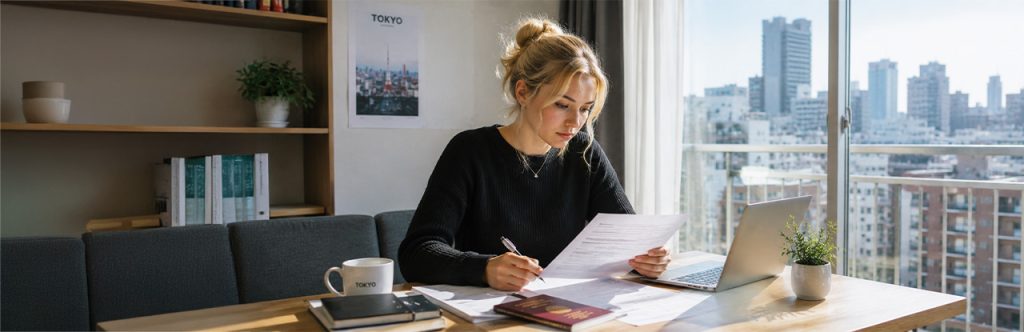
Many foreigners sign a lease without fully understanding its conditions, only to discover important restrictions after moving in. Before renting an apartment in Japan, take the time to review every part of the contract, even if the apartment itself seems perfect.
Japanese rental agreements often contain rules and fees that may be unfamiliar if you’ve never rented in Japan before.
Pay particular attention to the following points:
| Contract detail | Why you should check it |
|---|---|
| Minimum stay | Some properties require a minimum rental period. |
| Renewal fee | Traditional leases often charge a renewal fee every two years. |
| Notice period | Find out how much notice you must give before moving out. |
| Early termination | Some contracts include penalties for leaving before the agreed term ends. |
| Guest policy | Overnight guests or long-term visitors may be restricted. |
| Furniture responsibility | Understand who pays if furniture or appliances are damaged. |
| Pet policy | Don’t assume pets are allowed, even in larger apartments. |
| Address registration | Confirm that you can register the apartment as your official address if required. |
If any part of the contract is unclear, don’t hesitate to ask questions before signing. A reputable landlord or property manager should be willing to explain every clause so you know exactly what you’re agreeing to.
This is especially important if you’re signing the lease remotely before arriving in Japan, as making changes after you’ve moved in can be difficult.
Common mistake
Some renters assume that all leases follow the same rules. In reality, contract conditions vary widely between landlords, property management companies, and housing providers. Never rely on assumptions. Read every clause carefully before signing.
The next section will focus on something that’s often overlooked during apartment visits: how to properly inspect the property and identify potential problems before you move in. This is where many costly mistakes can be avoided.
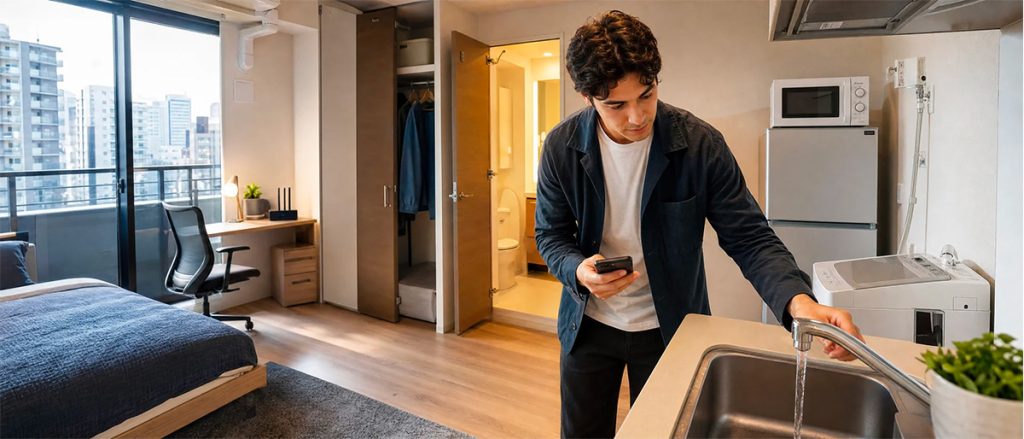
5. Inspect the apartment beyond first impressions
An apartment may look clean and modern in listing photos, but pictures rarely tell the whole story. Before renting an apartment in Japan, it’s important to inspect the property carefully to identify issues that could affect your comfort after you move in.
If you’re able to visit the apartment in person, don’t rush through the viewing. Take your time and check every room, open cabinets, test appliances, and look closely at the overall condition of the property.
If you’re renting from overseas and can’t visit in person, ask for a recent video tour or schedule a live virtual viewing. This gives you a much better understanding of the apartment than photos alone.
Here’s what you should inspect during your visit:
| What to inspect | Why it matters |
|---|---|
| Walls and ceilings | Look for cracks, water stains, or signs of previous leaks. |
| Mold and humidity | Bathrooms, kitchens, and windows are the most common areas where mold develops. |
| Natural light | A bright apartment often feels larger and is generally more comfortable to live in. |
| Ventilation | Good airflow helps prevent humidity and mold, especially during Japan’s rainy season. |
| Water pressure | Test the shower, sink, and kitchen faucet. Poor water pressure can become frustrating over time. |
| Windows | Check that they open and close properly and provide good insulation. |
| Air conditioning | Turn it on to make sure it works correctly. |
| Electrical outlets | Verify that there are enough outlets for your daily needs. |
| Storage space | Japanese apartments are often compact, so storage is an important consideration. |
| General cleanliness | A well-maintained apartment usually reflects good property management. |
Small details can make a big difference once you move in. An apartment that looks attractive online may have limited storage, poor ventilation, or outdated appliances that aren’t immediately obvious from the listing.
Pro tip
Take photos or videos during the viewing, especially if you notice existing scratches, stains, or damage. Keeping a record of the apartment’s condition can help avoid disputes when you move out.
6. Evaluate the neighborhood, not just the apartment
Finding the right apartment isn’t only about the property itself. The surrounding neighborhood will shape your daily routine, influence your commute, and affect your overall quality of life.
Before renting an apartment in Japan, spend some time researching the area. If possible, visit the neighborhood at different times of the day. A street that feels quiet in the morning may become busy and noisy in the evening.
Here are some of the most important things to consider:
| What to check | Why it matters |
|---|---|
| Distance to the nearest station | A shorter commute saves both time and transportation costs. |
| Supermarkets | Easy access to groceries makes everyday life more convenient. |
| Convenience stores | Having a convenience store nearby is surprisingly useful in Japan. |
| Restaurants and cafés | Especially important if you don’t cook every day. |
| Pharmacies and hospitals | Essential for emergencies and daily healthcare needs. |
| Parks and green spaces | Great for relaxing, exercising, or taking a break from city life. |
| Noise levels | Check for nearby train tracks, busy roads, bars, or nightlife. |
| Safety | Research the area’s reputation and observe the neighborhood after dark. |
Also think about how the neighborhood fits your lifestyle.
A student may prioritize being close to their university and affordable restaurants, while a professional might value a short commute and a quiet environment for remote work. Digital nomads may prefer neighborhoods with cafés, coworking spaces, and reliable public transportation.
Common mistake
Many renters choose an apartment because it’s slightly cheaper, only to spend more money and time commuting every day. Sometimes paying a little more for a better location offers much greater value in the long run.
The next section will look beyond the apartment itself and focus on the building. Amenities such as security, parcel lockers, bicycle parking, and shared facilities can have a significant impact on your daily comfort, yet they’re often overlooked during the decision-making process.
7. Check the building’s amenities and security
The apartment itself is only one part of your living experience. Before renting an apartment in Japan, take a close look at the building and the facilities it offers. Features that may seem like small conveniences during a viewing can make a significant difference once you move in.
Modern residential buildings often include amenities that improve comfort, security, and day-to-day convenience. While you may not need every feature, understanding what’s available will help you compare properties more effectively.
Here’s what you should check:
| Building feature | Why it matters |
|---|---|
| Elevator | Essential if you live on an upper floor or move heavy luggage. |
| Auto-lock entrance | Provides an extra level of security by restricting access to residents and authorized visitors. |
| Security cameras | Help create a safer living environment. |
| Parcel lockers | Ideal if you frequently receive online deliveries and aren’t home during the day. |
| Bicycle parking | A valuable feature if you plan to commute or explore the city by bike. |
| Garbage collection area | Check how waste is organized and whether disposal rules are convenient. |
| Laundry facilities | Some buildings offer shared laundry rooms, which can be useful if the apartment doesn’t include a washing machine. |
| Common areas | Well-maintained entrances, hallways, and shared spaces often reflect good property management. |
A building that is clean, secure, and well maintained is usually a good indicator that the property is professionally managed. On the other hand, neglected common areas may suggest that maintenance issues are not addressed promptly.
Pro tip
Visit the building entrance and common areas before making your decision. If they appear clean, organized, and well cared for, there’s a good chance the apartments are managed to the same standard.
8. Make sure the apartment fits your lifestyle
It’s easy to compare apartments based on price, size, or location, but the best apartment isn’t necessarily the one with the lowest rent. Before renting an apartment in Japan, think about how you’ll actually live once you move in.
Ask yourself a few practical questions:
- Will you study or work from home?
- Do you cook regularly or eat out most days?
- Will you stay for a few months or several years?
- Do you need space for hobbies or fitness equipment?
- Will friends or family visit during your stay?
- How important are privacy and quiet surroundings?
Your answers will help you identify which apartment features matter most.
For example:
- A student may prioritize affordability, proximity to campus, and a furnished workspace.
- A young professional may value a short commute, reliable internet, and a quiet environment.
- A digital nomad may need excellent Wi-Fi, a comfortable desk, and easy access to cafés or coworking spaces.
- A couple may prefer additional storage, a larger kitchen, and more living space.
Choosing an apartment that matches your daily routine often leads to a much better living experience than simply choosing the cheapest available option.
Common mistake
Many renters focus on what they need today without thinking about the months ahead. An apartment that feels suitable during your first week in Japan may become inconvenient if your work, studies, or lifestyle change over time.
The final two sections of this guide will help you avoid last-minute surprises by covering the essential questions to ask before signing your lease and summarizing everything into a practical decision-making checklist.
9. Ask these questions before renting an apartment in Japan
Even if the apartment looks perfect and the price fits your budget, there are still a few important questions you should ask before signing the lease. Before renting an apartment in Japan, never assume that everything is included or that the rules are the same for every property.
Taking a few minutes to clarify the details now can prevent misunderstandings and unexpected expenses later.
Here are some of the most important questions to ask the landlord or property manager:
| Question | Why you should ask |
|---|---|
| Are all monthly fees included in the advertised price? | Confirms the total monthly cost you’ll actually pay. |
| Which furniture and appliances are included? | Avoid unexpected purchases after moving in. |
| Is Wi-Fi already installed and included? | Internet installation can take time and involve additional costs. |
| Are utilities already connected? | Saves you from arranging electricity, gas, and water yourself. |
| Can I register this address as my residence? | Essential for students, workers, and long-term residents. |
| What happens if I need to leave early? | Understand any penalties or notice periods. |
| Who should I contact if something breaks? | Knowing the maintenance process can save time during emergencies. |
| Is English support available? | Helpful if you don’t speak Japanese fluently. |
| Are there any additional fees not listed in the contract? | Gives you one final opportunity to identify hidden costs. |
A professional property manager should be able to answer these questions clearly and transparently. If you receive vague or inconsistent answers, consider it a warning sign and take the time to compare other options before making your decision.
Pro tip
Keep all important information in writing. If the landlord or property manager confirms that certain services or furniture are included, ask for that confirmation by email or ensure it appears in the lease agreement.
Find an apartment in Japan with confidence
By now, you know exactly what to look for before signing a lease in Japan. From hidden fees and building rules to commuting times and neighborhood safety, checking every detail can quickly become overwhelming, especially if you’re searching from overseas.
That’s why Enkostay makes the process much simpler.
Every apartment on our platform is carefully reviewed before being listed, giving you access to verified properties with detailed descriptions, high-quality photos, and transparent pricing. Instead of spending hours comparing dozens of listings across different websites, you can easily find accommodation that matches your budget and lifestyle.
Whether you’re moving to Japan to study, work, or start a new adventure, our goal is to help you make an informed decision without the usual uncertainty that comes with renting abroad.
Why choose Enkostay?
- Verified apartments for international tenants
- Clear listing information with transparent pricing
- Fully furnished accommodation ready to move into
- Online booking from anywhere in the world
- English-speaking customer support throughout your journey
Finding the right apartment shouldn’t feel like taking a gamble. With Enkostay, you can compare trusted listings, book online in just a few clicks, and move to Japan knowing exactly what to expect.
Final thoughts
Finding the right home isn’t just about choosing the apartment with the lowest rent or the most attractive photos. Before renting an apartment in Japan, it’s essential to look at the complete picture, including the true monthly cost, move-in expenses, lease conditions, the apartment’s condition, and the neighborhood you’ll be living in.
Taking the time to compare these factors will help you avoid common mistakes that many foreigners make when they first arrive in Japan. It will also make your move much smoother and allow you to settle into your new life with confidence.
If you’re looking for a move-in-ready home, choosing a fully furnished apartment can simplify the entire process. With furniture, essential appliances, and a ready-to-live-in space already prepared, you can focus on enjoying your new life in Japan instead of worrying about buying furniture or setting up your apartment.
Before making your final decision, explore our guide to Furnished apartments in Japan: The easiest housing option for foreigners, where you’ll learn why furnished apartments have become one of the most practical and convenient housing solutions for international students, professionals, and long-term visitors.
Renting an apartment in Japan? Frequently asked questions
What should I check before renting an apartment in Japan?
You should check the total monthly cost, move-in fees, lease conditions, furniture and appliances, the apartment’s condition, building amenities, neighborhood, internet availability, and any additional rules before signing the contract.
How much are the move-in costs in Japan?
Traditional rentals often require several upfront payments, such as a security deposit, key money, agency fees, and the first month’s rent. Depending on the property, these costs can total several months of rent.
Are apartments in Japan usually furnished?
Most traditional apartments in Japan are unfurnished or only partially furnished. However, many apartments designed for foreigners, students, and short-term residents come fully furnished and are ready to move into.
Is location more important than rent?
Both matter, but a convenient location can save you significant commuting time and transportation costs. In many cases, paying slightly more for a better location provides greater value than choosing the cheapest apartment available.
Can foreigners rent apartments in Japan?
Yes. While some traditional landlords may have additional requirements, many housing providers and furnished apartment operators offer rental solutions specifically designed for international residents, making the process much easier for foreigners.